
Outfit Ideas
Skirt with T-Shirt: 27 Expert Ways to Master 2025’s Most Versatile Look
Aug
The pairing of skirts with t-shirts represents fashion’s most enduring dialogue between comfort and style. This combination transcends seasonal trends, offering liberation from restrictive clothing while maintaining an edge of sophistication that adapts to virtually any context. Recent street style analysis from Fashion Week Spring 2025 reveals that over 68% of attendees incorporated at least one skirt-and-tee ensemble during the week-long event—a 15% increase from previous years.
What makes this pairing exceptional lies in its deceptive simplicity. The juxtaposition of a structured skirt against the relaxed nature of a premium t-shirt creates visual tension that draws the eye while remaining fundamentally wearable. This balance embodies the essence of modern dressing—where functionality and aesthetics no longer compete but coexist harmoniously.
Brands like Awcaseus have refined this philosophy through their approach to t-shirt design, where urban minimalism meets architectural precision. Their premium 250-280gsm cotton tees provide the substantial structure needed to elevate casual combinations while maintaining breathable comfort across seasons. This level of considered construction transforms what could be merely casual into something intentionally refined.
In this comprehensive guide, you’ll discover techniques for pairing different skirt silhouettes with complementary t-shirt styles, body-specific recommendations to enhance your natural proportions, and precise outfit formulas for every context from weekend markets to corporate environments. More than clothing suggestions, this represents a framework for developing your personal aesthetic vocabulary through pieces you likely already own.
How Has the Skirt and T-Shirt Combination Evolved in Fashion?
The journey of the t-shirt from utilitarian undergarment to fashion cornerstone mirrors broader cultural shifts toward functionality and democratization in style. Originally developed as military-issue undershirts in the early 20th century, t-shirts remained hidden beneath proper attire until the 1950s when icons like Marlon Brando transformed them into symbols of rebellion.
The pairing with skirts, however, gained significant momentum during the minimalist movement of the 1990s. Calvin Klein’s groundbreaking 1992 campaign featuring Kate Moss in a simple white tee and fluid skirt encapsulated a new approach to dressing—one that prioritized ease and authenticity over obvious displays of wealth. This watershed moment established the combination as a legitimate fashion statement rather than merely casual attire.
By the early 2000s, the juxtaposition of feminine skirts with masculine-coded t-shirts became a visual shorthand for the emerging concept of high-low dressing. Magazine editorials regularly featured couture skirts paired with vintage tees, challenging traditional notions of what constituted proper styling.
The 2010s saw further evolution with the rise of streetwear, where graphic tees met technical fabrics and experimental silhouettes. Now in 2025, we’ve reached a synthesis of these approaches—where the quality of materials, precision of fit, and thoughtfulness of styling elevate this seemingly straightforward pairing into a nuanced form of self-expression.
Awcaseus exemplifies this evolution through their technical approach to t-shirt construction. Their architectural lines and premium fabric weights acknowledge the t-shirt not as a basic but as a foundational garment worthy of engineering precision. When paired with contemporary skirt silhouettes, these pieces create a dialogue between structure and movement that feels distinctly of this moment.
The versatility of this pairing extends beyond aesthetic considerations. The skirt-and-tee combination offers practical advantages that explain its enduring appeal across demographics. The inherent comfort allows for movement and adaptability throughout demanding days, while the separate pieces permit strategic layering as temperatures fluctuate.
From an economic perspective, this pairing maximizes wardrobe efficiency. A collection of five premium t-shirts and five thoughtfully selected skirts theoretically yields twenty-five distinct outfits before considering accessories or layering pieces. This mathematical advantage makes it particularly valuable for those building capsule wardrobes or traveling with limited luggage space.
The environmental implications deserve recognition as well. By investing in fewer, higher-quality pieces that coordinate across multiple outfits, consumers naturally reduce the resource demands of their wardrobes. When these pieces are constructed from responsible materials and designed with longevity in mind—as with Awcaseus’ pre-shrinkage treatment and durable construction—the sustainability benefits compound over time.
Perhaps most significantly, this combination offers unparalleled capacity for personal expression. The t-shirt provides a canvas for graphic statements, textural interest, or simple chromatic blocking, while skirts contribute silhouette, movement, and often pattern or visual weight. This partnership creates balanced tension that draws attention while remaining fundamentally wearable.
What Skirt Types Work Best with T-Shirts in 2025?
Mini Skirts with T-Shirts
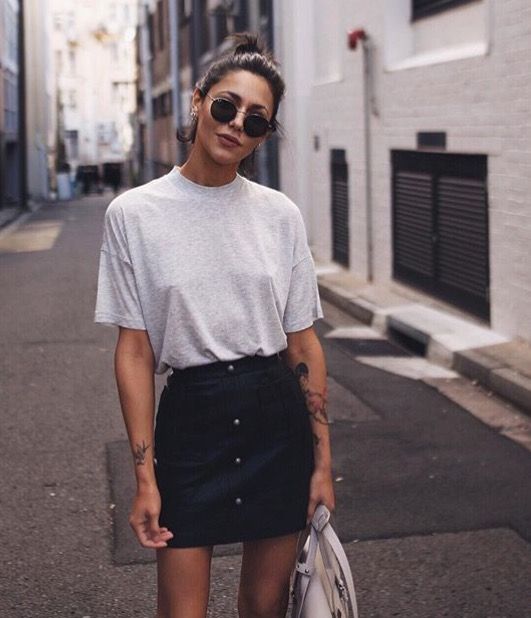
The mini skirt continues its cultural conversation in 2025 through refined fabrications and architectural details that elevate this historically youthful silhouette into sophisticated territory. Current collections feature A-line structures with subtle pleating that create controlled volume, bubble hems that introduce playful dimensionality, and strategic embellishments that transform simple shapes into statement pieces.
When pairing t-shirts with mini skirts, proportion becomes the primary consideration. Fitted t-shirts create a streamlined silhouette that emphasizes the leg line, particularly effective for petite frames seeking to create the illusion of height. The precise shoulder seams and structured cotton of Awcaseus tees provide clean lines that complement the abbreviated hemlines without competing for attention.
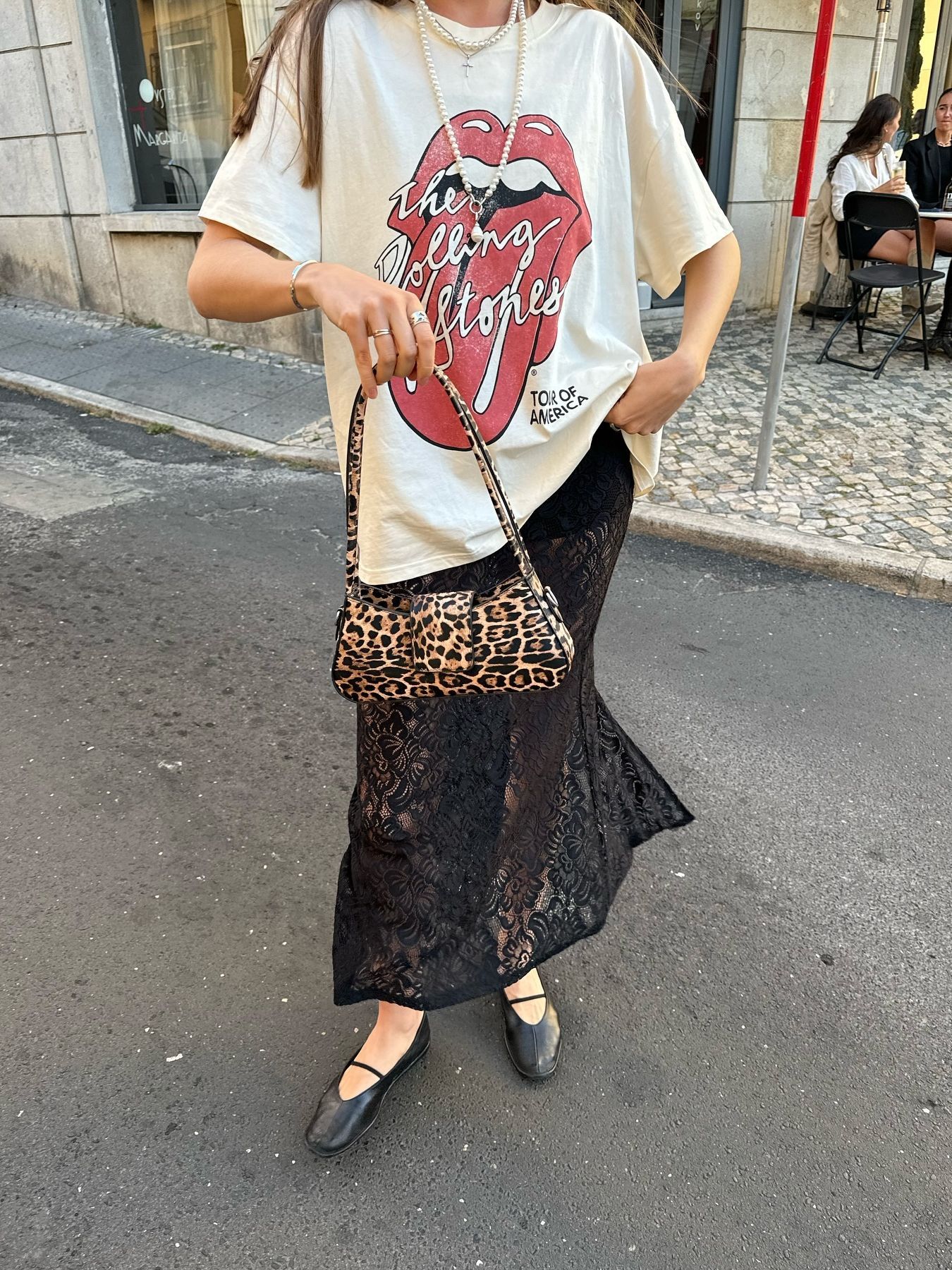
For those seeking contemporary balance, slightly oversized t-shirts create effective contrast against shorter hemlines. This pairing works particularly well with A-line minis, where the structured flare of the skirt anchors the relaxed upper volume. The technique succeeds when the t-shirt maintains structure through substantial fabric weight—precisely why Awcaseus’ 250-280gsm cotton performs exceptionally in these combinations.
Body type considerations further refine these approaches. For curvier figures, a French tuck (partially tucked at the front center) creates waist definition while retaining the casual spirit of the pairing. Taller individuals benefit from proportionally longer tees that balance their natural vertical line. Straight figures might select textured or patterned mini skirts to create dimensional interest where curves are less pronounced.
For casual contexts, consider a denim mini paired with a titanium gray Awcaseus tee, ankle boots, and minimal accessories—a formula that works equally well for weekend errands or casual dinners. For evening, transform the silhouette with a black sequined mini skirt, the same premium tee, and architectural heels—demonstrating how the quality of the t-shirt bridges the formality gap between day and evening contexts.
Midi Skirts with T-Shirts
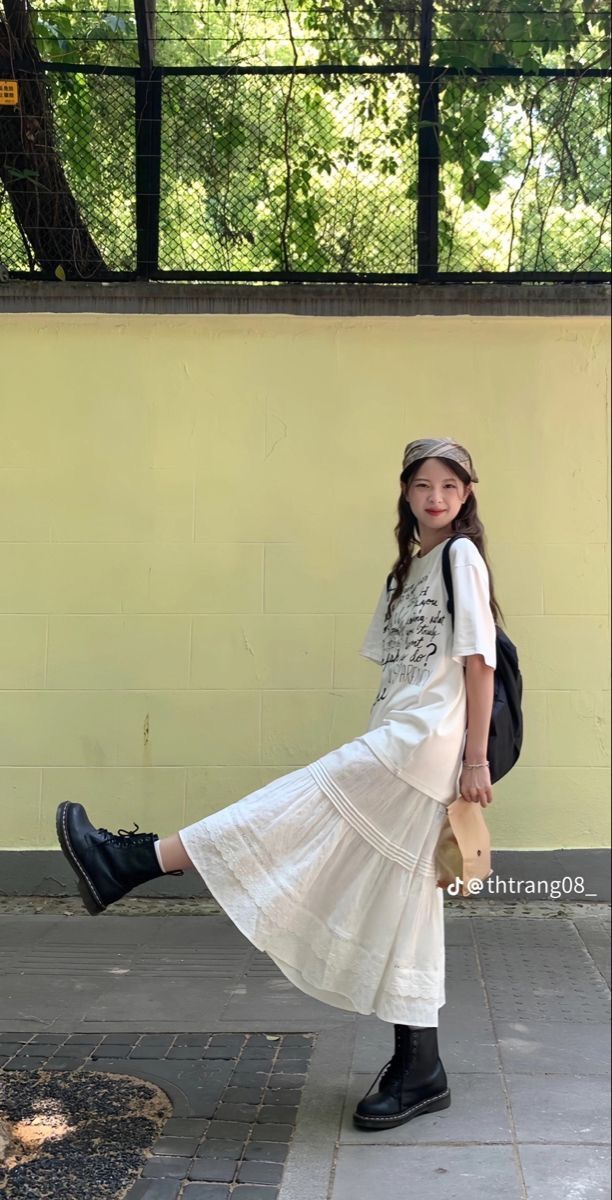
The midi skirt represents perhaps the most versatile canvas for t-shirt styling in 2025, available in silhouettes ranging from fluid A-lines to structured pencil shapes. This season’s standout variations include asymmetrical hemlines that create dynamic movement, technical pleating that introduces controlled texture, and substantial fabrications like densely woven cotton-linen blends that maintain shape throughout wear.
The relationship between midi skirts and t-shirts hinges on creating intentional balance. Full-circumference pleated midis pair harmoniously with more fitted tees that create clear distinction between the structured lower volume and the streamlined upper body. The substantial weight of Awcaseus t-shirts prevents the bunching that often occurs with lighter fabrics when tucked into waistbands, resulting in a cleaner line.
Pencil midi skirts demand a different approach, typically benefiting from a slight front tuck that defines the waist while allowing the t-shirt to drape naturally at the sides and back. This technique highlights the narrowest part of the torso while accommodating the fitted hip section of the skirt. The calibrated weight of premium cotton tees ensures adequate structure without excessive bulk when tucked.
For diverse body types, midi skirts offer customizable solutions. Petite frames (under 160cm) should consider midi lengths that hit just below the knee rather than mid-calf to maintain proportion, paired with monochromatic color schemes that create visual length. Fuller figures benefit from A-line midis that skim rather than cling, styled with tees in substantial fabrics that create smooth lines without compression.
The midi-and-tee combination transitions seamlessly from informal to professional environments. For creative workplace settings, combine a pleated navy midi skirt with Awcaseus’ carbon black tee, adding architectural flats and minimal gold accessories. The result maintains comfort while projecting authority through clean lines and considered proportions. For weekend wear, the same tee pairs with a floral midi skirt, leather sandals, and a structured market tote—demonstrating the t-shirt’s transformative versatility.

Seasonal adaptation represents another strength of this silhouette pairing. During warmer months, the midi skirt provides ventilation and movement while t-shirts offer breathability and sun protection. As temperatures drop, the addition of tights, boots and layering pieces extends wearability without sacrificing the fundamental proportional balance that makes the combination effective.
Maxi Skirts with T-Shirts
Maxi skirts command attention in 2025 through architectural approaches that transcend their bohemian ancestry. Current iterations include columnar silhouettes that create striking vertical lines, precisely engineered tiered constructions that manage volume without overwhelming the frame, and knife-pleated variations that introduce technical texture while maintaining fluid movement.
The extended length of maxi skirts requires deliberate t-shirt styling to maintain harmonious proportion. The most effective approach typically involves clearly defining the waistline to prevent the silhouette from becoming shapeless. This can be achieved through a complete tuck, waist-defining belt, or selecting slightly cropped t-shirt styles that meet the skirt’s waistband exactly. The structured nature of Awcaseus t-shirts provides the substantial hand needed to balance the visual weight of full-length skirts.
Height considerations significantly impact maxi styling. Individuals under 165 centimeters benefit from column maxi skirts with minimal volume, paired with monochromatic or vertically striped tees to create visual elongation. Platforms or wedges can further enhance this stretching effect. Taller frames have greater flexibility with volume but should maintain proportion through strategic waist definition to prevent the torso from appearing compressed.
For casual interpretations, combine a tiered black cotton maxi skirt with Awcaseus’ titanium gray tee, minimalist leather sandals, and architectural silver accessories—creating sophisticated ease through texture variation and tonal coordination. For elegant evening occasions, pair a fluid satin maxi skirt with the same premium tee, adding sculptural heels and statement earrings. The juxtaposition of the technical cotton against the liquid skirt fabric creates compelling textural contrast.
The maxi-and-tee combination offers particular benefits during transitional weather. The full coverage of the skirt provides warmth while the breathable nature of quality cotton maintains comfort as temperatures fluctuate throughout the day. This adaptability makes it especially valuable during spring and fall months when daily temperature variations can exceed 10 degrees Celsius.
Special Fabric & Pattern Guide
The interaction between t-shirt foundation and skirt fabrication significantly influences the success of any styling attempt. Understanding these material relationships elevates basic combinations into considered compositions.
Denim skirts establish a utilitarian foundation that pairs effectively with virtually any t-shirt variation. The structural weight of Awcaseus tees balances the substantial hand of denim, creating harmony through complementary textures. For classic denim, contrast works effectively—titanium gray tees against dark indigo or navy against faded vintage washes. Tucking creates clean lines for tailored denim shapes, while french or side tucks maintain casual ease with A-line or distressed variations.
Satin and silk skirts require thoughtful balance due to their inherent luminosity and fluid drape. These luxurious fabrications benefit from the matte structure of premium cotton tees, creating textural counterpoint while maintaining elegance. The substantial weight of Awcaseus t-shirts prevents the shifting that often occurs when pairing lightweight tees with slippery fabrics. A complete tuck typically achieves the most sophisticated result, allowing the skirt’s movement and light-catching properties to become the focal point.
Leather skirts create immediate tension when paired with cotton tees—a contrast that requires deliberate management. The substantial hand of quality cotton stands up to leather’s inherent weight without being overwhelmed. For sleek leather pencil skirts, fitted tees in complementary tones create sophisticated coherence. For fuller leather silhouettes, slightly oversized t-shirts balance the visual weight while maintaining proportion. In both cases, Awcaseus’ architectural minimalism provides clean lines that complement leather’s inherent edge.
Patterned skirts demand strategic t-shirt selection to avoid visual competition. For bold florals, geometric prints, or animal patterns, solid t-shirts in coordinating neutrals create harmony while allowing the skirt pattern to command attention. Awcaseus’ core palette—titanium gray, carbon black, and navy with gray undertones—provides versatile canvases that complement rather than compete with complex patterns. For subtle patterns, tonal coordination creates sophisticated depth without overwhelming the eye.
Pleated and textured skirts introduce three-dimensional complexity that typically benefits from simpler t-shirt pairings. The structural precision of Awcaseus tees provides clean upper-body lines that counterbalance the visual movement of pleating. Technical fabrics like performance mesh or textured crepes establish contemporary tension when paired with substantial cotton, creating dialogue between traditional and innovative textiles.
This material understanding transcends mere aesthetics, directly impacting comfort and functionality. The consistent structural integrity of premium cotton ensures that the t-shirt maintains its intended silhouette throughout wear, regardless of the skirt fabric’s weight or behavior. This reliability transforms what could be a basic pairing into a considered composition that remains intentional from morning to evening.
How Do Different T-Shirt Styles Change Your Skirt Look?
Fit & Silhouette Impact
The structural relationship between t-shirt fit and skirt silhouette fundamentally alters the visual narrative of any outfit. This interaction creates the gestalt impression before any details register.
Fitted t-shirts establish a foundation of intention and refinement. Their defined shoulder lines and torso-skimming silhouettes create clean visual pathways that direct attention deliberately. When paired with fluid skirts, they provide necessary structure that prevents the overall look from becoming amorphous. With structured skirts, they create cohesive formality through consistent lines. The precise construction of Awcaseus fitted tees—with reinforced shoulder seams and substantial fabric weight—ensures they maintain this intentional shape throughout wear, rather than stretching or distorting as lower-quality alternatives often do.
Oversized t-shirts introduce volume and proportion play that transforms even basic skirt silhouettes. The deliberate expansion of the upper body creates counterpoint when paired with fitted skirts, establishing tension between structure and release. With fuller skirts, oversized tees require strategic front tucking to prevent shapelessness. The calibrated weight of Awcaseus’ premium cotton ensures that oversized silhouettes maintain architectural drape rather than collapsing into formlessness. This structural integrity allows for intentional volume rather than mere bagginess.
Cropped t-shirts interact directly with high-waisted skirts to create defined waistlines without tucking. This relationship works particularly well for natural hourglass shapes or those seeking to create the illusion of a defined waist. The precision of the crop becomes essential—ideally meeting the skirt’s waistband exactly rather than creating a gap. Awcaseus’ commitment to controlled shrinkage ensures their cropped styles maintain intended proportions even after repeated washing.
Age considerations influence these silhouette relationships without dictating rigid rules. Younger consumers might layer cropped tees over long tanks with midi skirts, creating dimensional complexity through layering. Mid-life professionals often find that fitted or semi-fitted styles paired with structured skirts convey authority while maintaining contemporary relevance. Those with mature style often return to slightly oversized silhouettes paired with fluid skirts—prioritizing movement and comfort while maintaining intentional proportion.
Different body architectures likewise influence optimal proportions. Athletic frames with broader shoulders often benefit from slightly fitted tees that echo rather than emphasize upper body structure, paired with A-line or pleated skirts that create balance. Curvier figures typically find that semi-fitted styles with minimal stretch showcase natural contours without compression, working well with both structured and fluid skirt types.
Graphic Tees & Statement Styles
Graphic elements transform basic t-shirts into communication vehicles—opportunities to introduce narrative, texture, and focal points into otherwise simple combinations.
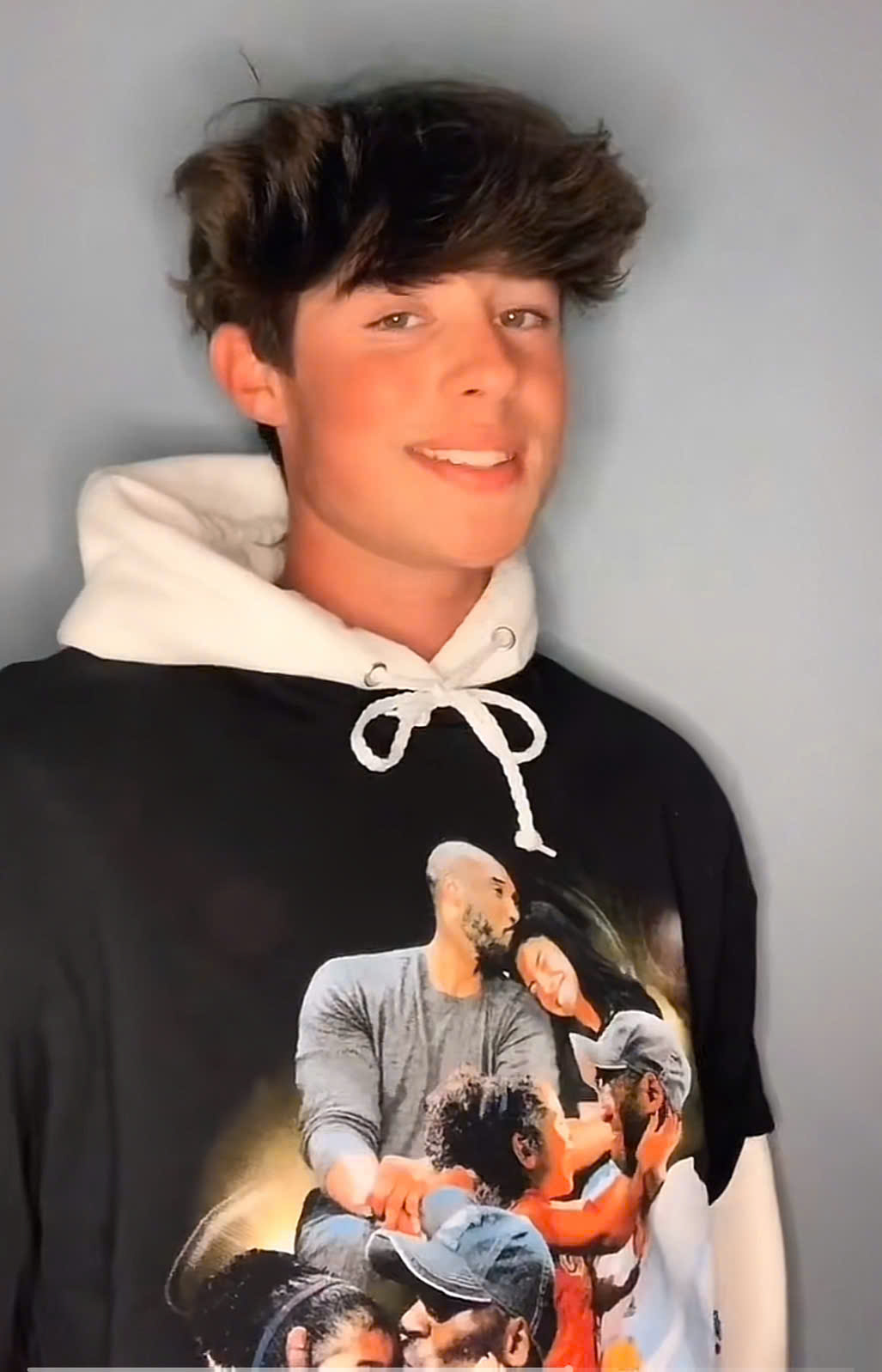
When pairing graphic tees with skirts, visual balance becomes paramount. Simple skirt silhouettes in solid colorways provide the optimal canvas for complex graphic elements, allowing the imagery to command deserved attention. Awcaseus’ minimal tech-inspired graphics—featuring abstract gradient effects and architectural lines—create subtle visual interest that complements rather than competes with varied skirt styles.
Color coordination creates cohesion between graphic elements and skirt selections. Extracting secondary or tertiary colors from graphic designs and echoing them in skirt choices establishes sophisticated connection without obvious matching. Awcaseus’ controlled palette allows their gradient prints to harmonize with diverse color stories while maintaining the brand’s distinctive aesthetic.
The formality spectrum for graphic tees ranges from weekend casual to creative professional environments. Subtle architectural graphics paired with structured midi skirts and blazers create acceptable expressions for design-forward workplaces. The same tee transitions to casual contexts when paired with denim skirts and minimal accessories. The water-based printing techniques employed by Awcaseus ensure their graphics maintain refinement rather than the plastic hand of conventional screenprints—contributing to their versatility across formality contexts.
For those seeking distinctive personal expression, vintage graphic tees introduce meaningful narrative when juxtaposed against contemporary skirt silhouettes. This pairing creates temporal dialogue between past and present, particularly effective with minimalist skirt designs that provide contrast to aged graphics. Similarly, artist collaboration tees transform outfits into wearable galleries—most effective when paired with architecturally simple skirts that function as frames rather than competing elements.
The physicality of the graphic printing technique significantly influences versatility. Raised plastisol prints create textural interest but limit draping and tucking potential due to stiffness and potential cracking. Water-based prints like those used by Awcaseus integrate more naturally with the fabric, maintaining breathability and natural movement while allowing for normal wear patterns like tucking without damage to the design.
Neckline & Sleeve Variations
Neckline architecture fundamentally alters how t-shirts interact with the face, jewelry, and overall proportion—subtly transforming identical shirt-skirt combinations through these critical framing elements.
Crew necklines provide classic structure that works particularly well with statement skirts or layered necklaces. This traditional form allows the collarbone and neck to remain mostly covered, directing attention to the face and outfit proportions rather than the décolletage. For professional environments, this coverage often reads as appropriately modest while maintaining contemporary relevance. Awcaseus’ precision-cut crews feature slightly lower front placement (approximately 7cm from the base of the neck) that flatters diverse neck lengths without compromising the classic silhouette.
V-necklines introduce vertical lines that visually elongate the torso—particularly valuable for petite frames or those seeking to create length in the upper body. The depth of the V significantly impacts its effect; shallow Vs create subtle face-framing while deeper variations introduce more dramatic vertical pathways. When paired with high-waisted skirts, moderate V-necks create balanced proportion by breaking up the potential expanse of fabric with strategic skin exposure.
Scoop necklines open the upper chest area with curved lines that soften facial features through shape echo. This architecture works particularly well for angular face shapes or those seeking to create perceived fullness in the upper chest. Scoops pair effectively with structured skirt silhouettes like pencil or A-line shapes, where the curved neckline provides counterpoint to the geometric lower half.
Sleeve architecture dramatically impacts both silhouette and practicality across seasons. Cap sleeves provide shoulder coverage with minimal restriction, ideal for warmer months or layering under jackets. Short sleeves extending to mid-bicep create classic proportions that work across contexts with consistent appropriateness. Three-quarter sleeves introduce forearm definition while providing moderate coverage, particularly effective during transitional seasons or for those preferring arm coverage without full-length restriction.
For different body architectures, these variations offer targeted solutions. Broader shoulders often benefit from scoop or V necklines that create vertical pathways rather than horizontal emphasis. Fuller busts typically find moderate scoops or shallow Vs provide comfortable accommodation without excessive exposure. Longer necks work well with higher crews that provide balanced proportion, while shorter necks benefit from moderate scoops that create space.
The architectural lines of Awcaseus’ unisex silhouettes offer distinctive shoulder structure that frames the face decisively regardless of neckline variation. Their measured approach to classic forms—with subtle contemporary adjustments to proportion—ensures these foundational elements enhance rather than distract from overall outfit composition.
What Are the Best Skirt and T-Shirt Outfit Formulas for Different Occasions?
Casual & Everyday Outfits
Weekend Market Formula: Combine a mid-length denim A-line skirt with Awcaseus’ titanium gray crew neck tee, tucked casually at the front center. Add leather slide sandals (under 2.5cm heel), a structured crossbody bag, and minimal silver hoop earrings. This combination balances practical comfort with intentional styling through consistent proportion and textural variation.
Urban Exploration Blueprint: Pair a black cotton-blend midi skirt featuring an asymmetrical hemline with Awcaseus’ navy gradient graphic tee in a relaxed fit. Add white leather sneakers, a lightweight packable backpack, and architecturally minimal sunglasses. The combination allows for extensive walking (up to 20,000 steps) while maintaining metropolitan sophistication through contemporary silhouettes.
Coffee Meeting Structure: Select a camel-colored pleated midi skirt with Awcaseus’ fitted carbon black crew neck, fully tucked. Add leather loafers, a structured leather tote large enough for a 13-inch laptop, and a minimal gold pendant necklace. This formula projects casual authority through clean lines and neutral coordination while providing comfort for extended sitting.
Summer Evening Framework: Combine a floral print maxi skirt in fluid fabrication with Awcaseus’ slightly cropped white crew neck tee. Add leather thong sandals, statement earrings in a color drawn from the skirt pattern, and a small clutch. This combination creates ventilation for warm evenings while providing enough coverage for temperature drops after sunset.
Vacation Day Architecture: Pair a brightly colored linen-blend wrap mini skirt with Awcaseus’ oversized titanium gray V-neck, front-tucked. Add leather espadrilles with 3cm wedge height, a market tote, and a straw hat with 8cm brim. This formula’s breathable natural fibers manage heat effectively while projecting relaxed intentionality rather than careless tourism.
These casual formulas demonstrate how thoughtful component selection transforms everyday combinations into considered compositions. The premium construction of Awcaseus tees elevates these pairings through structural integrity—maintaining intentional silhouettes throughout active wear rather than stretching or losing shape as the day progresses.
Office & Professional Settings
Creative Industry Blueprint: Pair a black pleated midi skirt with knife-sharp precision folds with Awcaseus’ fitted navy crew neck, fully tucked. Layer with a structured beige blazer, add 5cm black leather pumps, and incorporate minimal geometric earrings. This formula projects creative authority through architectural lines while maintaining comfort for variable studio environments.
Corporate-Adjacent Framework: Combine a charcoal gray pencil skirt (knee-length) with Awcaseus’ titanium gray fitted tee featuring subtle gradient graphic detail. Add a black tailored blazer, 7cm pointed-toe pumps, and a rectangular leather watch with minimal face. This combination satisfies traditional office codes while introducing contemporary elements through precise fit and subtle design details.
Academic/Publishing Environment: Select a navy A-line midi skirt with functional side pockets, paired with Awcaseus’ carbon black scoop neck tee. Layer with a structured cardigan in complementary tone, add leather oxfords with minimal heel, and incorporate statement glasses and a leather messenger bag. This formula balances intellectual seriousness with practical comfort for days involving both presentation and extensive movement.
Tech Workplace Structure: Pair wide-leg cropped trousers (functioning as a skirt silhouette) with Awcaseus’ slightly oversized gradient graphic tee, front-tucked. Add minimal white leather sneakers, a convertible backpack-tote, and architecturally inspired stud earrings. This combination respects tech’s casual codes while introducing enough structure to command meeting authority.
The professional versatility of premium t-shirts depends entirely on fabric quality and structural integrity. Awcaseus’ 250-280gsm cotton weight ensures their tees maintain crisp lines throughout the workday without the sagging or stretching that immediately reads as unprofessional. The pre-shrinkage treatment likewise ensures these pieces retain their proportional relationships with coordinating garments even after multiple laundry cycles—essential for workwear reliability.
Evening & Special Events
Gallery Opening Composition: Combine a metallic pleated midi skirt in silver or gold tone with Awcaseus’ black fitted crew neck, fully tucked. Add architectural heels (7-9cm), a structured clutch, and a single statement cuff bracelet. This formula creates effective balance between creative expression and sophisticated restraint through controlled textural contrast.
Dinner Date Architecture: Pair a deep burgundy leather pencil skirt with Awcaseus’ slightly relaxed scoop neck in titanium gray. Add black suede pointed-toe boots with 5cm heel, minimal gold jewelry, and a convertible crossbody bag. This combination creates tactile interest through material contrast while maintaining elegant proportion through strategic fit selection.
Theater/Performance Formula: Select a black maxi skirt with subtle movement detail (asymmetrical hem or strategic pleating) paired with Awcaseus’ fitted V-neck featuring their signature gradient print. Add 6cm heeled ankle boots, architectural statement earrings, and a small structured clutch. This combination balances comfort for extended sitting with appropriate formality through controlled silhouette and refined details.
Cocktail Event Blueprint: Combine a jewel-toned satin midi skirt featuring fluid movement with Awcaseus’ premium fitted black crew neck, fully tucked and belted with a minimal leather belt. Add strappy heeled sandals (8-10cm), delicate layered necklaces, and a metallic minaudière clutch. This formula demonstrates how the quality of a seemingly simple tee can bridge the formality gap when constructed from premium materials and paired strategically.
The success of t-shirts in elevated contexts relies primarily on immaculate fit, fabric quality, and proportional relationships. Awcaseus’ silk-screen printing technique, which creates refined gradient effects rather than plastic-feeling graphics, further extends their appropriateness into formal settings where conventional printed tees would read as overly casual.
How Do You Create Perfect Proportions with Skirts and T-Shirts?
Tucking & Styling Techniques
Full tuck methodology creates the most formal and structured relationship between t-shirts and skirts. This technique works optimally with t-shirts featuring adequate length (minimum 5cm below natural waistline) and skirts with defined waistbands. Begin by positioning the t-shirt evenly around the torso, then tuck fabric completely into the skirt waistband, distributing volume evenly. For more definition, add a belt at the natural waist, positioning it to completely cover the waistband seam. This approach creates clean lines particularly effective for professional environments or structured evening looks.
The French tuck represents the ideal compromise between structure and relaxation. This partial tucking at the front center creates waist definition while maintaining casual movement. Begin with an untucked tee, then use dominant hand to tuck approximately 10-15cm of fabric at the front center into the skirt waistband. Allow sides and back to remain loose for dimensional contrast. This technique works particularly well with Awcaseus tees due to their substantial fabric weight, which creates intentional draping rather than flimsy collapse when partially tucked.
Side tuck variations introduce asymmetrical interest that creates dynamic movement. This approach works effectively with oversized tees and A-line or gathered skirts. Position the tee naturally on torso, then gather approximately 15cm of fabric at one side (typically left for right-handed individuals) and secure into waistband, allowing excess fabric to drape diagonally across the hip. The calibrated weight of premium cotton creates sculptural folds rather than messy bunching with this technique.
Front knot styling introduces casual dimension without bulk at the waistline. This approach works best with lightweight skirts where waistband bulk would create unflattering lines. Position tee at desired height, typically 2-3cm above skirt waistband. Gather 10-15cm of fabric at bottom hem center, twist once, then tie in simple knot. Adjust knot position to sit at or slightly above skirt waistband. For side knots, follow similar technique but position at hip point rather than center.
Belt integration transforms both fully tucked and untucked combinations by creating definitive waistlines regardless of actual body contours. For tucked styles, position belt directly over skirt waistband, completely covering the seam. For untucked approaches with longer tees, position belt at natural waist over the tee itself, gathering fabric subtly for definition without formal tucking. Awcaseus’ pre-treatment process, which minimizes shrinkage after purchase, ensures these belt relationships remain consistent through multiple laundry cycles—maintaining intended proportions rather than creating awkward length changes.
These techniques demonstrate how manipulation of the same components creates dramatically different visual narratives. The quality of the t-shirt fabric significantly impacts success—lighter weights collapse or bunch unflatteringly, while excessive thickness creates uncomfortable bulk. Awcaseus’ calibrated 250-280gsm weight achieves the ideal middle ground where structure meets comfort.
Body Type Specific Styling
Petite frames (typically under 160cm) benefit from creating unbroken vertical lines that maximize perceived height. Select skirts that hit precisely at or above the knee for minis, or mid-calf rather than ankle for midis. Avoid horizontal details that segment the figure visually. Pair with fitted or semi-fitted tees in similar color families to the skirt, creating cohesive color columns that elongate the silhouette. Employ full tucks or precise crop tops that meet skirt waistbands exactly, avoiding fabric overlap that creates horizontal breaks. Consider higher waistlines (natural waist or slightly above) to visually extend the leg line.
Tall frames (typically above 175cm) have greater flexibility with proportional play but still benefit from strategic balance. Midi lengths that hit mid-calf rather than above ankle create harmonious proportion. Full-volume skirts paired with fitted tees balance the vertical scale effectively. Alternatively, column skirts with slightly oversized tees (particularly styles with dropped shoulders or extended sleeves) create contemporary proportion by introducing horizontal elements that temper extreme verticality. Belt placements slightly below the natural waist can create the illusion of a more centered silhouette.
Curvy and plus-size frames benefit from defined waistlines and strategic volume distribution. High-waisted A-line or pleated skirts that fit precisely at the smallest torso point before releasing into controlled volume create flattering proportion. Pair with semi-fitted tees featuring adequate stretch (5-7% elastane blend) that accommodate curves without compression. The substantial fabric weight of Awcaseus tees prevents the transparency issues that often occur when lighter fabrics stretch across fuller busts. Employ French tucking to define the waist while allowing comfortable fabric distribution.
Athletic frames with broader shoulders or less defined waists benefit from creating strategic balance through volume and detail placement. A-line or gathered skirts introduce curved elements that contrast beautifully with structured shoulders. Consider scoop or V necklines that create vertical pathways rather than emphasizing shoulder width. For those desiring waist definition, belted styling with full tucking creates structure where natural curves may be less pronounced. Skirts with diagonal construction details draw the eye inward, creating the impression of a more defined waistline.
Rectangular or straight frames without pronounced waist definition benefit from techniques that create the illusion of curves through strategic styling. Wrap skirts or those with asymmetrical hemlines introduce diagonal lines that suggest shape through visual movement. Pair with fitted tees tucked and belted exactly at the narrowest torso point (even if only marginally narrower) to create waist impression. Consider skirts with subtle gathering or pleating that introduce dimensional volume at the hip area, paired with more fitted upper body lines to suggest curvilinear contours.
These recommendations represent starting frameworks rather than rigid rules. The most compelling personal style often emerges from understanding proportion basics, then strategically breaking selected principles to create distinctive visual signatures. The consistent quality of well-constructed foundation pieces like Awcaseus tees ensures that these experimental proportions read as intentional rather than haphazard.
Seasonal Layering Strategies
Spring transitional layering centers on versatile mid-weight additions that accommodate daily temperature fluctuations (often 5-15°C in a single day). Light button-downs worn open over fitted tees and skirts create adjustable coverage without bulk. Position collar to frame the neckline of the tee beneath for intentional layering. Lightweight cotton blazers provide structure and warmth while maintaining breathability as temperatures rise throughout the day. For cooler mornings, consider a lightweight cashmere cardigan that can be tied at the waist when no longer needed—creating accessory function from practical layering.
Summer layering focuses on sun protection and air conditioning defense rather than warmth. Sheer open-weave button-downs create UV protection while allowing maximum ventilation. Position collar to stand away from neck, creating air circulation channels. Lightweight linen blazers with minimal lining provide structured coverage for air-conditioned environments while breathing effectively outdoors. Consider cotton voile scarves that serve triple duty—neck coverage from sun, impromptu head covering for unexpected showers, and shoulder wrap for evening temperature drops.
Fall layering introduces substantive mid-layers that extend summer pieces through decreasing temperatures. Lightweight merino cardigans create insulating layers without bulk, particularly effective when belted over tee-and-skirt combinations to maintain defined waistlines. Quilted vests provide core warmth while allowing arm mobility—particularly useful for active commuting. For precipitation protection, consider water-resistant trench coats with removable linings that adjust to temperature fluctuations while maintaining professional lines over office-appropriate skirt combinations.
Winter strategies require technical approaches to preserve the t-shirt and skirt aesthetic through genuinely cold conditions. Heat-tech underlayers beneath fitted tees create invisible insulation. Opaque tights (minimum 80 denier) extend skirt wearability while wool-blend tights (150+ denier) provide genuine warmth down to near-freezing temperatures. Over-the-knee boots create additional leg coverage with distinctive style impact. For outer layers, wool-blend coats with thigh-length proportions maintain overall silhouette while providing substantive warmth.
Awcaseus’ calibrated 250-280gsm weight positions their tees ideally for layering strategies. The substantial fabric creates enough structure to hold its own shape beneath open layers without collapsing, while the controlled thickness prevents excessive bulk when positioned beneath fitted outer pieces. The premium cotton composition likewise adapts effectively across temperature ranges—breathing during warmer conditions while providing meaningful insulation value when temperatures drop.
These seasonal approaches demonstrate how the humble t-shirt and skirt pairing extends far beyond fair-weather combinations. With strategic layering, this foundation serves year-round functionality across climate conditions while maintaining its essential character through controlled proportion and intentional styling.
How Do You Accessorize Skirt and T-Shirt Combinations?
Footwear Pairings
Sneaker integration elevates casual combinations through considered coordination. For midi skirts, low-profile court sneakers in white leather create clean lines without excessive visual weight. The minimal silhouette bridges casual and refined aesthetics effectively. With mini skirts, platform variations (2-4cm sole height) create balanced proportion while adding stature. For maxi lengths, technical knit sneakers with architectural sole structures prevent the combination from reading as overly precious.
Sandal selection ranges from functional flat variations to sculptural heeled statements. For day wear with casual skirt combinations, minimalist leather slides with under 2cm heel height provide practical comfort while maintaining intentional styling through quality materials. Evening presentations benefit from strappy 5-8cm heeled sandals featuring architectural metal details that echo Awcaseus’ urban design philosophy. For maxi skirts in particular, delicate thong sandals with minimal sole thickness create barefoot elegance while remaining practical for extended wear.
Boot pairings transform seasonal wearability while introducing textural dimension. Ankle variations with 3-5cm block heels complement midi hemlines precisely, creating clean lines without excess visual information. For mini skirts, similar ankle heights prevent the combination from skewing juvenile through balanced coverage. Knee-high or over-knee variations extend summer skirts into colder seasons when paired with opaque tights, with 2-4cm heels providing practical elevation for daily wear.
Loafers and flats offer professional refinement with practical comfort for active days. Structured leather loafers with minimal hardware provide workplace-appropriate finishing without sacrificing comfort during commuting or extended standing. For creative professional environments, architectural ballet flats with distinctive details like metal caps or geometric cutouts elevate simple tee-and-skirt combinations through considered detailing without introducing impractical height.
The relationship between skirt volume and footwear substantiveness requires careful balancing. Fuller skirt silhouettes typically benefit from more substantive footwear that anchors the volume effectively—chunky loafers, lug-sole boots, or platform constructions create this weighted foundation. Column skirts or streamlined pencil shapes harmonize with more delicate footwear—minimal sandals, pointed flats, or refined heels that continue the sleek lines rather than creating proportional opposition.
Bags & Jewelry
Bag scale relative to skirt volume creates crucial proportional relationships that register immediately even before specific design details. Fuller skirt silhouettes benefit from structured bags with substantive presence—architectural totes, boxy crossbodies, or geometric bucket shapes provide counterbalance to movement and volume. Fitted pencil or column skirts harmonize with sleeker profiles—minimal clutches, slim envelope crossbodies, or vertical totes that continue the streamlined aesthetic rather than introducing competing volume.
Jewelry approaches range from minimal to statement, depending on neckline architecture and desired focal points. For crew neck tees, longer pendants (45-60cm) create vertical pathways that elongate the torso visually. V-necks harmonize with shorter focal points (30-40cm) that nestle within the neckline shape. Scoop variations accommodate layered necklaces of graduated lengths that echo the curved opening. Awcaseus’ architectural aesthetic pairs particularly effectively with geometric jewelry featuring clean lines and minimal embellishment—creating cohesive design language across the full presentation.
Creating cohesive accessory stories requires considered coordination without matching exactitude. Unifying elements might include consistent metal selection (all gold-tone or all silver-tone), geometric shape languages (angular or curved), or material themes (all natural elements or all architectural inspirations). This approach creates sophisticated connection without the obviousness of matched sets.
Balance between casual t-shirts and formal accessories often determines whether combinations read as thoughtfully high-low or simply mismatched. Premium t-shirts like those from Awcaseus provide the necessary quality foundation for integration with fine jewelry or luxury accessories—the substantial fabric weight and precise construction align with the caliber of these elevated elements rather than creating disconnection.
The accessories selected often communicate more specific personality than the foundation garments themselves. While the tee-and-skirt combination provides versatile structure, accessories introduce narrative elements that personalize the foundation. Awcaseus’ tech-inspired aesthetic coordinates effectively with accessories featuring architectural influence, industrial elements, or minimalist forms—creating cohesive design language that transcends specific garment categories.
Belts, Hats & Finishing Elements
Belt integration transforms proportional relationships while introducing textural points of interest. For high-waisted skirts, positioning slim belts (1.5-2cm width) directly over the waistband creates definition without bulk. Medium-width belts (3-4cm) provide stronger waistline emphasis, particularly effective for rectangular body types seeking to create more defined curves. When worn over untucked tees, belts create definition while maintaining the casual spirit of the unbloused silhouette. Awcaseus’ architectural minimalism pairs naturally with belts featuring clean lines, matte finishes, and geometric buckle designs.
Hat selection introduces both practical function and distinctive personality to otherwise simple combinations. Structured fedoras with medium brims (5-7cm) add sophisticated finishing to maxi-and-tee combinations. Wide-brimmed straw variations (8-10cm brim) provide practical sun protection while introducing natural texture against the technical precision of premium cotton tees. Minimal beanies in fine gauge knits extend seasonal wearability while introducing textural contrast that complements Awcaseus’ urban aesthetic.
Scarves serve triple functionality across seasons—neck definition, hair management, and temperature regulation. Summer-weight cotton variations worn at the neck create vertical interest with crew necklines or color blocking with scoop or V-neck styles. Silk squares (approximately 50x50cm) tied at the neck introduce pattern opportunities that complement otherwise minimal combinations. Larger wool-blend variations provide practical warmth during colder seasons while creating dimensional volume that balances winter layering.
Eyewear considerations significantly impact overall presentation while providing practical function. Architectural frame shapes featuring geometric lines and minimal branding align effectively with Awcaseus’ design philosophy. Consider frame scale proportional to face size rather than following trend extremes—ensuring balanced proportion that complements rather than dominates facial features.
Hosiery extends seasonal wearability while introducing additional color and texture opportunities. Sheer variations (10-30 denier) in skin-matching tones create nearly invisible leg coverage for transitional temperatures. Opaque styles (50-100 denier) in coordinating colors extend color stories while providing meaningful warmth. Textured variations—subtle ribbing, geometric jacquards, or tonal patterns—introduce complex detail while maintaining sophisticated cohesion.
These finishing elements transform foundation combinations from basic to distinctive through considered coordination. Rather than approaching accessories as afterthoughts, view them as integral narrative components that complete the proportional and aesthetic story established by the primary garments.
Where Can You Find Inspiration for Skirt and T-Shirt Outfits?
Style Gallery & Visual Examples
Contemporary editorial interpretations beautifully demonstrate the elevation of t-shirt and skirt combinations through precise styling and quality components. The September 2024 Vogue Italia editorial “Urban Monuments” paired architectural cotton tees with technical pleated midi skirts, creating dialogue between structure and movement. The styling emphasized clean lines through full tucking, minimal accessories limited to single metal statement pieces, and sleek leather footwear with architectural heel shapes. This approach demonstrates how premium basics transform into high-fashion statements through intentional styling and quality construction.
Street style documentation from international fashion weeks reveals diverse interpretations across cultural contexts. Copenhagen Fashion Week Spring 2025 featured oversized gradient-printed tees paired with fluid silk midi skirts in complementary tones—creating harmony through color story while introducing tension through contrasting textures. Tokyo interpretations featured fitted graphic tees with technical fabric mini skirts and utility accessories, demonstrating urban functionality through waterproof materials and adaptable construction. These global variations show how cultural context influences the foundation combination while maintaining its essential versatility.
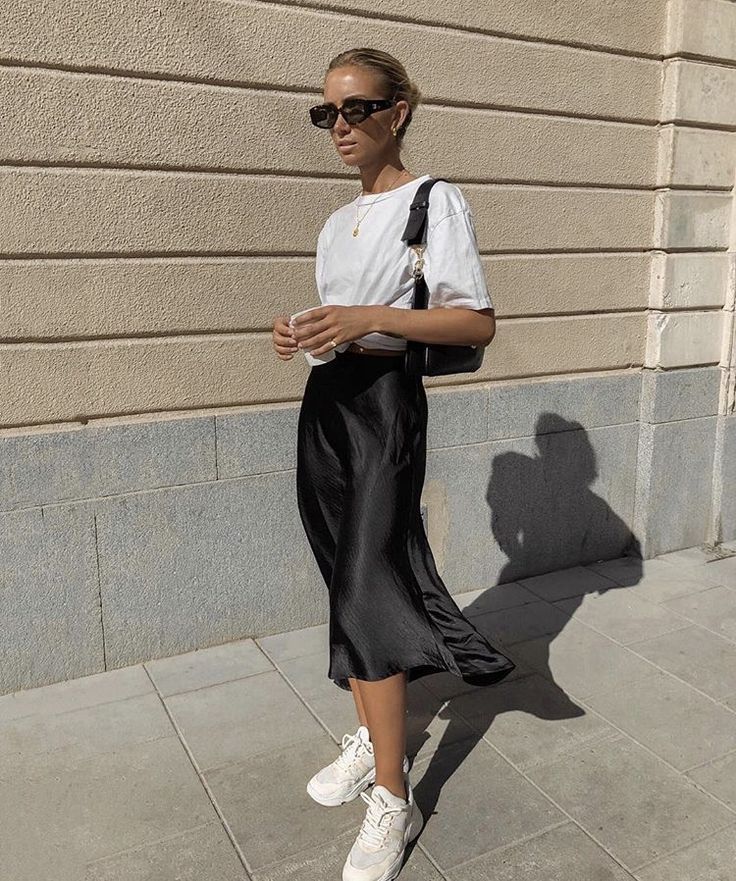
Celebrity styling provides accessible translation of runway concepts, with notable recent examples including Zendaya’s press tour combinations featuring vintage-inspired graphic tees with contemporary couture skirts. This high-contrast pairing demonstrates the versatility of premium t-shirts as anchoring elements for even the most elaborate bottom pieces. Similarly, Daniel Lee’s recent Bottega Veneta collections feature technically precise cotton tees paired with experimental textile skirts—elevating the humble t-shirt through exquisite construction quality rather than overt embellishment.
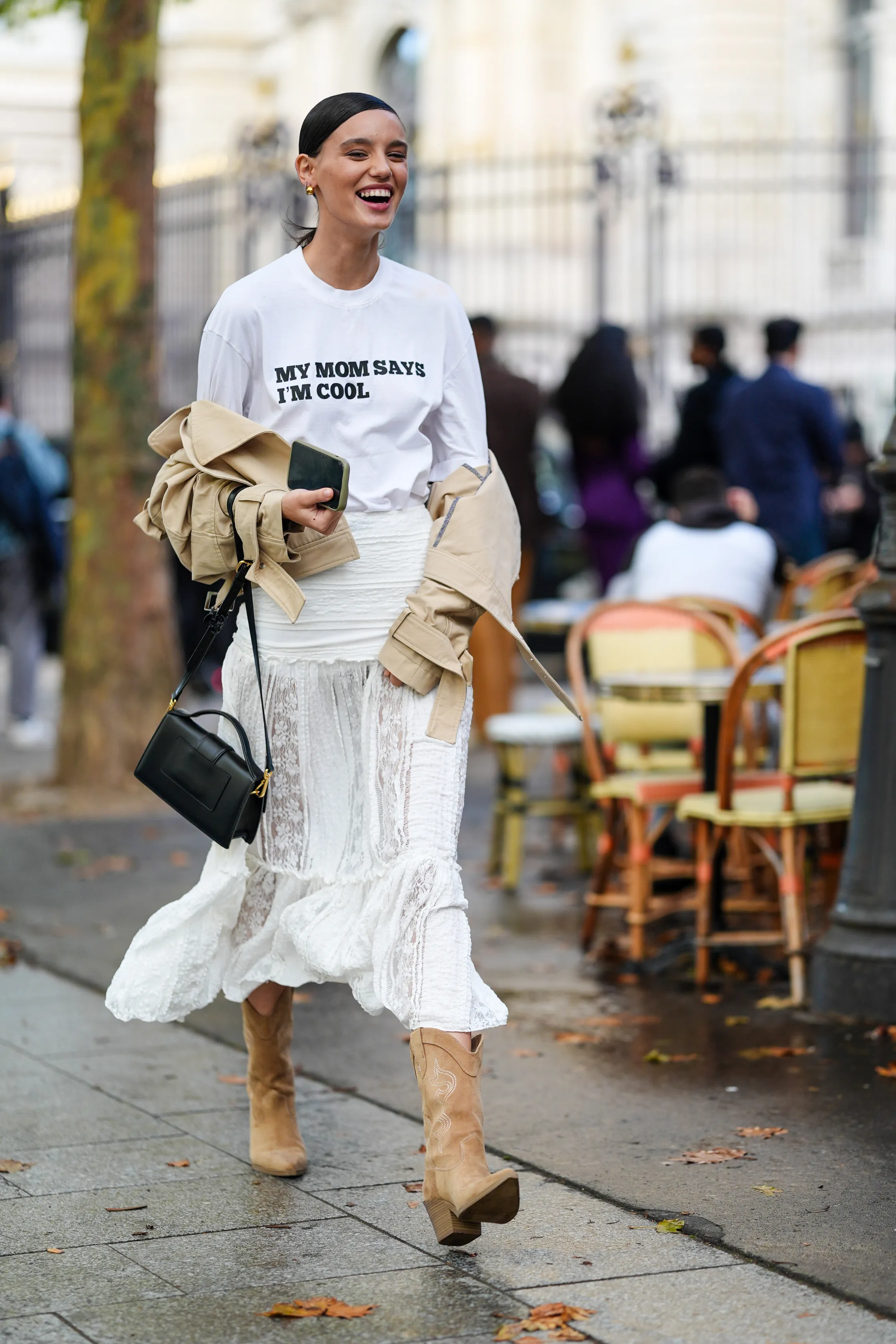
Awcaseus’ approach to this pairing emphasizes technical precision through fabric weight and construction technique. Their titanium gray gradient tee paired with a black technical pleated midi creates sophisticated urban minimalism appropriate for creative professional contexts. The same core tee transitions to weekend settings when styled with a structured denim midi skirt and architectural leather sandals. These combinations demonstrate how foundational quality elevates even the simplest pairings through material integrity and proportional precision.
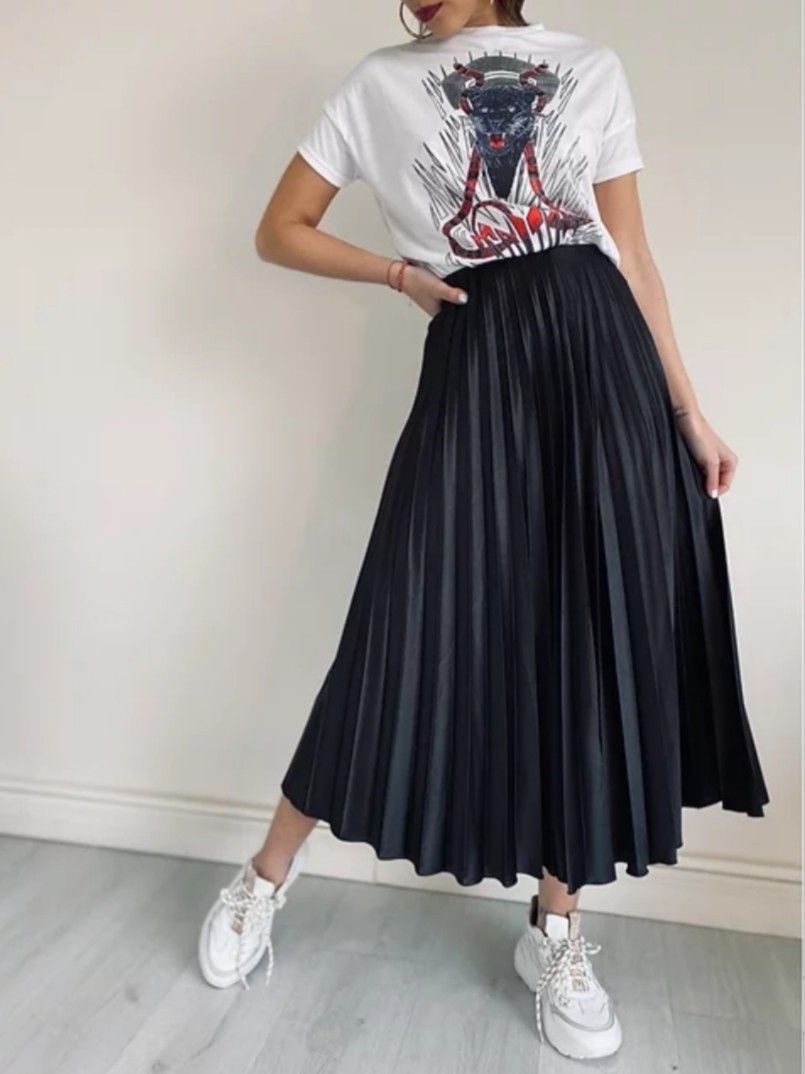
These diverse visual references share common threads despite their varied contexts—quality construction, intentional proportion, and thoughtful coordination. They demonstrate how the same foundational combination adapts across cultural contexts and formality levels while maintaining its essential character through balanced tension between structure and movement.
Style By Age & Life Stage
Teen and young adult styling approaches often emphasize experimentation and trend integration while accommodating active lifestyles and educational environments. Mini and midi skirt proportions typically predominate, paired with both fitted and oversized tee silhouettes depending on desired effect. Common combinations include pleated tennis-inspired minis with oversized graphic tees for weekend wear, or A-line button-front midis with fitted solid tees for internship or entry-level workplace settings. These combinations benefit from Awcaseus’ durability through their 250-280gsm cotton weight, which withstands frequent washing and active wear patterns common to this demographic.
Twenty-something to thirty-something styling typically balances emerging professional requirements with personal expression and social contexts. The diversity of career paths within this demographic necessitates versatile approaches—creative fields might embrace architectural midi skirts with minimal graphic tees for workplace settings, while corporate-adjacent roles often utilize pencil skirt silhouettes with premium solid tees layered beneath blazers. Weekend variations explore proportion play through volume relationships—perhaps pairing slim column skirts with oversized tee silhouettes, or full midi skirts with fitted crop tops. The technical precision of Awcaseus construction provides the necessary quality foundation for workplace credibility while their contemporary design elements maintain relevant personal expression.
Forty to fifty-something styling often prioritizes sophisticated ease while accommodating the confidence that comes with established personal aesthetic. Professional contexts typically feature knee-length or midi proportions with semi-fitted tee silhouettes that flatter without constriction. Weekend approaches might include premium denim skirts with architectural tees featuring subtle graphic elements, or fluid maxi silhouettes with structured crew necks. This demographic particularly benefits from Awcaseus’ pre-shrinkage treatment, which ensures consistent proportional relationships through multiple laundry cycles—maintaining the precise fit that distinguishes intentional casualness from careless dressing.
Sixty-plus styling demonstrates that foundational combinations remain relevant across the full age spectrum when adapted with appropriate proportion and construction quality. Midi and maxi lengths typically predominate, paired with semi-fitted tee silhouettes featuring higher necklines and structured shoulders. The substantial weight of premium cotton provides elegant draping without clinging—particularly important for maintaining sophistication as body contours change. Common combinations include knife-pleated midi skirts with slightly relaxed V-neck tees for cultural events, or column maxi skirts with structured crop tops for elegant casual dining. These pairings demonstrate how technical construction quality ensures age-appropriate refinement through precise fit and substantial hand.
These age-specific approaches recognize evolving priorities and contexts while maintaining the essential versatility of the foundation pairing. Rather than arbitrary restrictions, they represent responsive adaptation to changing life requirements—all built upon the consistent quality foundation that distinguishes intentional style from mere trend following.
What Are Common Styling Mistakes and How Can You Fix Them?
Proportion Problems & Solutions
Overwhelming volume represents a common proportion challenge, particularly when both skirt and t-shirt introduce substantial dimensions. This typically manifests as shapelessness that obscures the body’s natural lines rather than complementing them. The solution lies in creating intentional structure at least one focal point—typically the waist. For voluminous skirts paired with oversized tees, implement a full front tuck and add a defined belt to create waist emphasis. Alternatively, maintain the oversized tee but select a more fitted skirt silhouette that provides structural counterpoint. The substantial weight of Awcaseus tees provides natural structure even in oversized forms, preventing the complete collapse that often occurs with lighter-weight alternatives.
Unflattering length combinations can create visual segmentation that disrupts natural body flow. Most commonly, this occurs when t-shirt hems hit at the widest point of the hip while worn untucked with fitted skirts, creating unintentional horizontal emphasis. The solution involves either shortening (through precise front tucking) or lengthening (selecting longline styles extending below the hip curve) to create more flattering proportions. Similarly, midi skirts hitting at the widest part of the calf create unflattering horizontal breaks—adjust length to either knee height or true ankle length for more harmonious proportion.
The balance between fitted and loose elements creates the fundamental tension that makes these combinations interesting. When both pieces fit too snugly, the overall effect often reads as constricting rather than flattering. Conversely, when both pieces feature excessive volume, the silhouette loses definition entirely. The solution involves creating deliberate contrast—pair fitted tees with fuller skirt silhouettes, or combine fitted skirt profiles with more relaxed upper body lines. This oppositional relationship creates visual interest through tension rather than uniform construction.
For tucking techniques that create unflattering bunching, the fabric weight and construction quality often determine success. Lightweight tees typically create excess volume when fully tucked, leading to collapsed fabric and uneven distribution. The solution lies in higher-quality construction using substantive fabrics that hold their form—precisely why Awcaseus’ 250-280gsm weight performs exceptionally in tucked applications. Their premium cotton creates smooth, controlled distribution rather than chaotic bunching.
These proportion solutions demonstrate how small adjustments to the same foundational pieces significantly transform their effect. Rather than purchasing new components, most proportion issues can be resolved through strategic styling modifications that create more harmonious relationships between existing elements.
Fabric & Pattern Coordination
Fabric weight mismatches create discord when extremely lightweight tees (under 150gsm) meet heavy structural skirts, or conversely, when substantial sweater-weight tees overwhelm delicate skirt fabrications. This imbalance creates visual disconnection that registers as unintentional rather than deliberately contrasting. The solution involves calibrating fabric weights to maintain conversation rather than competition—lightweight skirts pair effectively with tees in the 180-220gsm range, while more substantial skirt fabrications harmonize with premium tees in the 220-280gsm range like those from Awcaseus.
Pattern combinations present particular challenges, with the most common mistake involving competing scales that create visual vibration rather than harmonious coordination. When pairing patterned skirts with graphic tees, maintain scale variation of at least 200% between elements—pair small-scale skirt patterns with larger graphic elements, or vice versa. Alternatively, employ the “one pattern” rule by selecting solid tees in colors drawn from patterned skirts to create intentional coordination. Awcaseus’ minimal gradient graphics provide subtle pattern interest that complements rather than competes with diverse skirt designs.
Color compatibility issues typically manifest as unintentional clashing rather than deliberate contrast. The solution lies in understanding color relationships beyond simple matching—consider temperature (warm versus cool undertones), saturation levels, and value (lightness versus darkness) when creating combinations. Awcaseus’ core neutrals—titanium gray, carbon black, and navy with gray undertones—function as sophisticated foundations precisely because their controlled undertones harmonize with diverse color stories without creating unintentional clash.
Seasonal fabric incongruence creates disconnect that registers immediately as unintentional. Heavy winter wools paired with tissue-weight summer tees create temporal discord regardless of color coordination. The solution involves maintaining seasonal consistency through fabric selection—pair summer-weight skirts with breathable premium cotton tees, and winter-weight bottoms with more substantial knit tops. Awcaseus’ calibrated fabric weight (250-280gsm) positions their tees as true three-season pieces that transition effectively between warm and cool weather contexts.
These material considerations demonstrate how technical understanding elevates styling beyond mere color matching. By developing sensitivity to fabric properties, fiber content, and construction techniques, combinations achieve sophisticated harmony through thoughtful material coordination rather than surface-level similarity.
Occasion-Appropriate Styling
Context misalignment represents one of the most common styling mistakes—creating combinations too casual or formal for their intended environments. For professional contexts, common errors include graphic tees with excessive visual information, untucked styling that presents as careless rather than intentional, or fabric qualities that appear worn rather than refined. The solution involves understanding specific industry codes—creative fields typically accept graphic elements and relaxed proportions when executed with quality components, while traditional corporate environments require more structure through tucking, layering, and minimal visible branding. Awcaseus’ architectural minimalism and premium construction quality position their tees appropriately for diverse professional contexts when styled accordingly.
For formal occasion underdressing, the mistake typically involves failing to elevate the foundation through strategic styling and quality components. The solution incorporates precise attention to construction quality—premium t-shirts featuring substantial fabric weight, refined neckline finishing, and precise fit create appropriate foundations for elevated contexts when paired with formal-leaning skirts. Add intentional accessories (architectural jewelry, refined leather goods), impeccable grooming, and coordinated color stories to transform the same basic pairing from casual to occasion-appropriate.
Age-appropriate parameters involve alignment with life context rather than arbitrary restrictions. The common mistake involves adopting styling that conflicts with authentic personal context—creating disconnect between presentation and actual lifestyle. The solution emphasizes authenticity through considered adaptation—younger individuals might explore proportion play through cropped tees and high-waisted skirts that flatter developing figures, while established professionals might select refined construction details and sophisticated color coordination that projects intentional confidence. The technical precision of Awcaseus construction provides appropriate foundation across age ranges when styled contextually.
Industry-specific dress code considerations require studied understanding of visual languages within different professional contexts. Creative fields typically value individual expression through unique combinations and unexpected pairings, while traditional environments prioritize consistency and refined interpretation of established norms. The solution involves researching specific industry examples—observe successful individuals within your target field, noting recurring elements that create credibility within that context. Then adapt those principles using quality foundation pieces that support your intended presentation.
These contextual considerations demonstrate how the same foundational components can traverse diverse environments through strategic styling rather than wardrobe multiplication. By understanding specific visual languages and adapting core pieces accordingly, the t-shirt and skirt pairing extends beyond casual categories into a truly versatile foundation suitable for comprehensive lifestyle requirements.
Expert Tips: How Do Fashion Professionals Approach This Pairing?
Stylist Insights & Designer Perspectives
Celebrity stylist Karla Welch, known for her work with traceable clients, approaches the t-shirt and skirt pairing through proportion logic rather than trend cycles. “I analyze the relationship between volume distribution and line creation before considering specific pieces,” she explains. “A successful outfit creates intentional tension between structure and release—perhaps a fitted tee against a full skirt, or a relaxed top balanced by a streamlined bottom. The quality of foundation pieces determines whether this tension reads as deliberate or accidental.”
Designer Christophe Lemaire, recognized for his sophisticated minimalism, emphasizes material integrity over obvious design elements. “The t-shirt represents perhaps the most demanding challenge for a designer precisely because its value derives from what you don’t see—the quality of cotton, precision of construction, consideration of proportional relationships. When paired with more expressive bottom pieces, this studied simplicity creates compelling visual conversation.”
Textile specialist Kavita Parmar of IOU Project suggests evaluating t-shirts through physical engagement rather than visual assessment alone. “Hold the fabric between your fingers and gently stretch along both grain and cross-grain. Quality cotton returns precisely to its original state without distortion. This recovery indicates the fabric will maintain its intended shape through wear, particularly critical when pairing with structured skirts where proportional relationships must remain consistent.”
The Awcaseus design team approaches their foundational pieces through architectural thinking that aligns with these professional perspectives. “We engineered our core t-shirts with consideration beyond mere aesthetics—examining how fabric weight influences drape, how pre-treatment affects dimensional stability, and how structural seam placement creates visual pathways,” explains their development team. “The 250-280gsm weight we selected provides substantial hand without excessive warmth, while our minimal stretch composition ensures these pieces maintain their calibrated proportions through extended wear.”
These professional insights reveal consistent emphasis on construction quality, material integrity, and proportional logic rather than trend-driven styling. The technical understanding that informs these perspectives creates reliable frameworks for elevated combinations regardless of seasonal fashion movements.
Sustainable & Ethical Considerations
Quality-focused consumption represents perhaps the most accessible entry point to sustainable wardrobe building. Investment in fewer, higher-quality foundation pieces reduces overall consumption while providing superior cost-per-wear value. Premium construction details like reinforced seams, pre-shrinkage treatments, and substantial fabric weights—features central to Awcaseus’ development philosophy—extend functional lifespans beyond fast-fashion alternatives. This longevity directly reduces environmental impact through decreased replacement frequency.
Fabric selection significantly impacts both environmental footprint and wearing experience. For cotton t-shirts, organic certification reduces pesticide use but represents just one consideration among many. Yarn quality, spinning techniques, and finishing processes further determine both environmental impact and product longevity. Awcaseus’ approach employs water-based inks rather than plastisol printing, reducing chemical load while creating prints that integrate with the fabric rather than sitting atop it—maintaining breathability while extending print longevity.
Capsule methodology provides structured framework for minimizing consumption while maximizing versatility. For skirt and t-shirt pairings, consider building from a foundation of five premium tees in coordinating neutrals (including black, navy, gray, white, and one personal signature color) plus five strategically selected skirts in complementary silhouettes. This twenty-five outfit foundation supports diverse styling interpretations while requiring minimal storage and reducing decision fatigue. The architectural minimalism of Awcaseus designs facilitates this approach through their emphasis on versatile foundation pieces rather than trend-driven statements.
Care practices significantly impact both environmental footprint and garment longevity. Wash premium cotton tees in cold water using gentle cycle settings to reduce energy consumption while preserving fabric integrity. Line drying further reduces environmental impact while preventing the shrinkage and fiber stress caused by machine drying. For spot cleaning, diluted white vinegar effectively addresses perspiration marks without harsh chemicals. These practices extend functional lifespan while maintaining the proportional relationships essential to successful styling.
Textile recycling provides responsible pathways for garments that have reached the end of their functional lives. When premium cotton tees eventually show wear beyond repair (typically after several years of regular use), textile recycling programs convert these materials into insulation, industrial wiping cloths, or fiber for new yarn production. This circular approach ensures that even well-worn garments contribute value rather than environmental burden through their full lifecycle.
These considerations demonstrate how thoughtful consumption and maintenance practices extend beyond moral virtue into practical benefits—creating more versatile, long-lasting wardrobes while reducing both environmental impact and financial outlay through strategic quality investment.
FAQ: Your Most Common Questions About Skirt and T-Shirt Styling
Fit & Occasion Questions
Can you wear a t-shirt and skirt to formal events?
The formality potential of this pairing depends entirely on component quality, styling technique, and accessory selection. Premium t-shirts constructed from substantial fabrics with refined finishing details can indeed transition to formal contexts when paired with appropriate skirts (silk, satin, or embellished variations) and elevated accessories. The key lies in deliberate styling—full tucking creates necessary structure, while minimal, architectural jewelry adds refined detail. For black tie events, this approach works best in creative industries where conventional rules allow greater interpretation, while semi-formal occasions permit this styling more broadly when executed with precision.
How do you style graphic tees with elegant skirts?
Creating harmony between expressive graphics and refined skirts requires careful balance. Select graphics with considered design elements—architectural patterns, subtle gradients, or minimal line illustrations like those featured in Awcaseus collections—rather than casual messaging or excessive color variation. Position the graphic precisely through thoughtful tucking techniques that frame the design intentionally rather than allowing random cropping. Pair with skirts featuring clean lines and minimal details that provide sophisticated foundation without competing visually. Complete with refined accessories in materials that elevate rather than contradict the graphic elements—perhaps metallic jewelry that echoes colors or shapes within the design.
What’s the best way to maintain structure in a t-shirt when paired with a skirt?
Structural integrity begins with material selection—premium cotton in the 220-280gsm range provides natural structure through fabric weight alone. Construction details further enhance this integrity—reinforced shoulder seams, double-needle stitching at stress points, and minimal elastane content prevent distortion through wear. Awcaseus’ pre-treatment process ensures dimensional stability through laundering, maintaining intended proportions rather than unpredictable shrinkage. For styling maintenance throughout wear, periodic readjustment of tucking or strategic use of fashion tape at key points creates lasting structure regardless of movement or activity level.
Are t-shirt and skirt combinations appropriate for all ages?
This versatile pairing adapts effectively across the full age spectrum when proportions and styling details respond to changing priorities. The essential combination remains relevant from teen years through mature decades, with adjustments to specific elements—perhaps neckline depth, sleeve length, skirt proportion, and fabrication quality—rather than abandonment of the fundamental pairing. What distinguishes sophisticated execution across ages lies in construction quality and fit precision rather than specific design elements. Premium t-shirts like those from Awcaseus provide the refined foundation necessary for age-appropriate styling through their substantial hand, precise fit, and architectural design approach.
How formal can a t-shirt and skirt combination become?
With strategic component selection and styling technique, this pairing can achieve sophisticated formality appropriate for most contexts short of black-tie requirements. The formality ceiling depends on skirt fabrication (luxury materials like silk, satin, or fine wool), t-shirt construction quality (premium cotton with refined finishing), styling precision (immaculate tucking, strategic belt placement), and accessory elevation (fine jewelry, refined leather goods). When each element maintains consistent formality through material quality and thoughtful coordination, the combination achieves sophisticated formal presentation without conventional suiting or traditional eveningwear construction.
Body Type & Proportion Questions
How do you style skirts and tees for petite frames?
Petite proportions (typically under 160cm height) benefit from creating unbroken vertical lines that maximize perceived stature. Select skirts with hem lengths that hit precisely at the knee for minis or mid-calf for midis rather than at mid-points that segment the leg line. Choose higher waistlines (natural waist or slightly above) to visually extend legs. Pair with fitted or semi-fitted tees in similar color families to the skirt, creating cohesive color columns that elongate the silhouette. Employ full tucks or precisely cropped styles that meet skirt waistbands exactly, avoiding fabric overlap that creates horizontal breaks. Consider vertical details like subtle center seams or V necklines that create upward pathways for the eye.
What skirt and t-shirt combinations flatter plus-size figures?
Curvier frames benefit from defined waistlines and strategic volume distribution that celebrates natural contours. Select high-waisted skirt styles that fit precisely at the smallest torso point before releasing into intentional volume—A-line silhouettes, knife pleats, or wrap constructions often prove particularly flattering. Pair with premium tees featuring adequate stretch (5-7% elastane blend) that accommodate curves without compression or transparency. Awcaseus’ substantial fabric weight ensures opacity even when contoured against fuller busts. Employ French tucking to define the waist while allowing comfortable fabric distribution. Consider neckline architecture that frames the face—moderate V-necks or scoops typically create balanced proportion.
How do you create waist definition with straight body types?
Rectangular frames without pronounced natural waist curves can create the illusion of definition through strategic styling techniques. Select skirts with diagonal construction details—wrap styles, asymmetrical hems, or angled seam lines—that create the impression of curves through visual movement. Pair with fitted tees tucked and belted precisely at the narrowest torso point (even if only marginally narrower) to emphasize subtle definition. Consider skirts with gathering or pleating concentrated at the sides rather than evenly distributed, creating dimensional volume at the hip area that suggests curvilinear contours. Color blocking through contrasting tones between top and bottom further enhances waist emphasis through visual segmentation.
What’s the best skirt length for my height?
Optimal length creates balanced proportion relative to individual height rather than following arbitrary rules. For shorter frames (under 160cm), hem lengths that hit precisely at the knee for minis or just below mid-calf for midis create the most flattering proportion by avoiding segmentation at the widest calf point. Mid-height individuals (160-175cm) have greater flexibility, though lengths that hit at the narrowest knee point or true ankle (rather than mid-calf) typically prove most flattering. Taller frames (over 175cm) benefit from longer proportions that balance their natural vertical lines—true midi lengths hitting mid-calf or maxi styles with substantial volume create harmonious distribution.
How do I minimize or maximize certain body areas with this pairing?
Strategic emphasis and de-emphasis comes through understanding how color, texture, and volume direct visual attention. To minimize fuller bust areas, select crew necklines or shallow scoops in darker solid colors, paired with more detailed or brighter skirts that draw attention downward. To enhance smaller bust areas, consider horizontal details, lighter colors, or subtle patterns in the tee paired with simpler skirt designs. For fuller hip areas, A-line or pleated skirts that skim rather than cling create flattering shape, while attention-drawing details at the upper body direct focus upward. For narrower hip areas, gathered or pleated skirts with dimensional volume create perceived curves, particularly effective when paired with fitted tees that emphasize the waist-to-hip relationship.
Care & Maintenance Questions
How do you prevent t-shirts from losing shape when worn with skirts?
Shape retention begins with material selection and construction quality. Premium cotton with minimal elastane content (under 5%) maintains structural integrity better than highly stretchy alternatives that deform through wear. Awcaseus’ calibrated 250-280gsm weight provides natural structure through fabric substance alone. Proper laundering significantly impacts longevity—wash in cold water using gentle cycles, avoid fabric softeners that weaken fibers, and air dry to prevent heat-related shrinkage and distortion. Between wearings, store t-shirts flat rather than hanging to prevent shoulder stretching. For tucking applications, regular readjustment throughout wear prevents strain concentration at waistbands.
What’s the best way to care for different skirt fabrics?
Fabric-specific care dramatically extends functional lifespan across diverse skirt materials. Cotton and linen respond well to cold machine washing with gentle detergents, while air drying prevents shrinkage. Silk, wool, and delicate synthetics typically require hand washing in cool water or professional dry cleaning depending on construction complexity. Leather and suede benefit from specialized conditioning products that maintain suppleness while preventing cracking. For all fabrics, immediately address spills using appropriate techniques—blotting rather than rubbing, water-based cleaners for natural fibers, specialized solutions for leather or suede. Proper storage further extends longevity—hanging structured styles, folding knits, and using padded hangers for delicate fabrics.
How do you maintain crisp tucking throughout the day?
Lasting tuck structure depends on both fabric quality and strategic technique. Premium cotton with adequate weight (220gsm+) naturally resists the creeping that plagues lighter fabrications. Awcaseus’ substantial hand provides the necessary structure for extended tucking success. For technical approaches, the military tuck creates lasting placement—after center front tucking, create small diagonal folds at the sides before securing fabric into the waistband. For additional security, strategic use of double-sided fashion tape at key points prevents shifting without damage to fabrics. Body movement consideration further extends staying power—slightly deeper tucks accommodate sitting position changes without complete displacement.
How many wears before washing is appropriate?
Optimal washing frequency balances hygiene considerations with fabric preservation and environmental impact. For premium cotton tees worn as a single layer in moderate climates without excessive perspiration, 2-3 wearings typically represent appropriate intervals before laundering. Factors necessitating more frequent washing include direct skin contact, visible soiling, notable odor, or prolonged exposure to environmental elements. Between full launderings, spot cleaning with diluted white vinegar effectively addresses underarm areas without complete washing. Seasonal considerations further influence appropriate intervals—summer wearing in humid climates typically necessitates more frequent laundering than winter usage in drier conditions.
How does Awcaseus ensure longevity through multiple wears and washes?
Awcaseus’ pre-treatment techniques specifically address common longevity challenges that plague lesser-quality alternatives. Their cotton undergoes controlled pre-shrinkage processing that removes up to 95% of potential dimensional change before garment construction, ensuring pieces maintain their calibrated proportions through laundering rather than unpredictable distortion. Reinforced construction at stress points—shoulder seams, necklines, and hemlines—prevents the unraveling that often signals the end of functional lifespan. Their water-based printing techniques integrate designs with the fabric rather than creating a plastic layer prone to cracking, maintaining aesthetic integrity through extended wearing and washing cycles.
What New Trends Are Emerging in Skirt and T-Shirt Styling?
2025 Trend Watch
Contemporary runway interpretations have elevated the t-shirt and skirt pairing through technical innovation and architectural approaches. Prada’s Spring 2025 collection juxtaposed paper-thin technical cotton tees against structured raffia skirts—creating compelling material tension between natural and engineered elements. Jil Sander’s recent exploration featured oversized, precisely constructed cotton tees paired with knife-pleated technical skirts with laminated surfaces, demonstrating how material innovation transforms even the most fundamental combinations. These directional approaches indicate continued elevation of basic forms through technical execution rather than embellishment or logomania.
Skirt silhouettes evolving for 2025-2026 include technical pleating with architectural precision, asymmetrical constructions that create dynamic movement, and hybrid forms that blend conventional categories. Particularly prevalent are column maxi skirts with strategic side slits that balance coverage with mobility, midi skirts featuring three-dimensional textile manipulation, and structured mini skirts with experimental material compositions. The common thread connecting these diverse forms lies in their technical execution—precise construction rather than decorative application creates their distinctive character.
T-shirt styling techniques continue evolving beyond basic tucking to include strategic gathering, intentional draping, and architectural folding. Current approaches feature asymmetrical tucks that create diagonal lines across the torso, twisted seam manipulations that transform basic shapes through structural intervention, and layering techniques that create dimensional complexity from simple components. These approaches align naturally with Awcaseus’ minimalist aesthetic, where their substantial fabric weight facilitates experimental styling through natural structure rather than synthetic stiffness.
Color direction for 2025 demonstrates tension between saturated statement hues and nuanced neutrals with subtle undertones. Particularly relevant are deep mineral tones—oxidized copper, slate blue, and forest green—paired with technical grays featuring subtle undertones. This palette creates sophisticated harmony through complementary saturation levels rather than obvious coordination. Awcaseus’ core offerings—titanium gray, carbon black, and navy with gray undertones—provide versatile foundations for integrating these emerging color stories while maintaining their minimalist design philosophy.
These emerging directions demonstrate how the fundamental t-shirt and skirt combination continues evolving through technical execution and material innovation rather than conceptual reinvention. The enduring relevance of this pairing lies precisely in its capacity for continuous reinterpretation while maintaining essentialist utility.
Gender-Fluid Approaches
Contemporary approaches to gender-fluid styling demonstrate expansion beyond traditional binary constraints while maintaining intentional proportion and technical precision. Current interpretations feature oversized tees with architectural structure paired with pleated skirts in substantial fabrics—creating balanced dialogue between traditionally coded elements without overt referencing of gender boundaries. The substantial construction of Awcaseus’ unisex silhouettes provides ideal foundation for these interpretations through their focus on structured minimalism rather than gendered detailing.
Proportion relationships in gender-fluid styling often emphasize balanced volume distribution rather than contrasting fitted/loose elements. Current approaches feature consistency in silhouette weight—perhaps column skirts with similarly structured tees, or fuller skirts balanced by oversized tops with intentional shaping. These relationships create cohesive harmonies that transcend conventional gender-coded combinations through technical consistency rather than obvious rejection of traditional forms.
The masculine-to-feminine spectrum provides framework for intentional positioning rather than binary categorization. Styling elements can be strategically deployed to create specific positioning on this spectrum—more structured shoulders and crew necklines introduce traditionally masculine coding, while scooped necks and waist emphasis introduce traditionally feminine elements. The architectural precision of Awcaseus designs facilitates this nuanced positioning through their technical execution rather than overtly gendered detailing.
Inclusive sizing represents a practical foundation for gender-fluid approaches, acknowledging diverse body architectures rather than assuming conventional proportional relationships. Brands developing genuinely inclusive approaches consider shoulder-to-hip ratios beyond binary assumptions, sleeve lengths that accommodate diverse arm proportions, and neckline constructions that work across chest architectures. Awcaseus’ technical development process specifically addresses these considerations through their focus on architectural proportion rather than gendered sizing conventions.
These evolving approaches demonstrate fashion’s capacity for meaningful social dialogue through technical execution rather than superficial trend adoption. The considered construction quality of foundation garments becomes particularly relevant in this context—providing the necessary structure for intentional styling interpretation regardless of gender presentation or body architecture.
Creating Your Signature Skirt and T-Shirt Style
The pairing of skirts with t-shirts represents perhaps the most versatile foundation in contemporary dressing—offering endless interpretation while maintaining fundamental wearability across contexts. The success of these combinations depends not on trend adherence or brand prominence, but on thoughtful component selection, material understanding, and proportional logic.
Quality foundation pieces like those from Awcaseus provide the necessary structural integrity for developing personal style language through their technical precision and material substance. Their architectural approach to t-shirt construction—featuring calibrated 250-280gsm weight, minimal stretch composition, and pre-shrinkage treatment—ensures these foundation pieces maintain their intended proportions through extended wear and laundering. This reliability transforms basic components into trusted building blocks for developing distinctive personal aesthetic through consistent quality rather than obvious branding.
Your signature approach emerges through thoughtful experimentation rather than rigid formula—examining how proportional relationships interact with your natural architecture, how material combinations create emotional resonance, and how styling techniques transform identical components into distinctive expressions. This exploration represents genuine style development rather than mere consumption, creating wardrobe efficiency through versatile foundation pieces that adapt to evolving contexts rather than requiring constant replacement.
The technical precision of premium basics enables this versatility through uncompromising construction quality rather than trend-driven design elements. When foundation pieces maintain their structural integrity through extended wear, styling possibilities expand exponentially—creating the foundation for genuine personal expression through reliable components rather than continuous acquisition.
This exploration ultimately transcends clothing itself, becoming instead a framework for understanding how thoughtful selection and technical precision transform even the most fundamental elements into distinctive expression. The humble pairing of skirt with t-shirt thus becomes not merely casual dressing, but a sophisticated dialogue between structure and movement, constraint and freedom, tradition and innovation—all expressed through the deceptively simple combination of two perfectly executed foundation pieces.

At Awcaseus, we create more than t-shirts — we craft statements. Inspired by urban stillness and modern philosophy, our pieces combine premium fabrics, structured fits, and abstract graphics. Every design is a reflection of thought, identity, and quiet confidence. Awcaseus is where fashion becomes a voice — and you wear the future.