
Outfit Ideas
Pant and T Shirt: 25+ Stylish Combos and Expert Tips for 2025
Aug
The convergence of function and aesthetic expression finds its purest manifestation in the fundamental pairing of pants and t-shirts—a sartorial combination that transcends cultural boundaries and demographic divisions. This textile alliance represents more than mere casual attire; it constitutes the architectural foundation upon which contemporary fashion constructs its most enduring narratives.
Current 2025 fashion movements emphasize the evolution toward wide-leg silhouettes paired with oversized fits, creating proportional harmonies that mirror the structural principles found in modern urban design. These trends reflect a broader cultural shift toward comfort-conscious luxury, where premium materials like 250-280gsm cotton maintain their form while delivering exceptional durability.
This comprehensive exploration serves fashion enthusiasts seeking elevated styling techniques and English language learners expanding their clothing vocabulary. The universality of this clothing combination creates a shared language across diverse communities, establishing common ground for cross-cultural fashion dialogue.
What Are Pant and T Shirt? Essential Definitions
The terminology surrounding these foundational garments reveals interesting linguistic variations across English-speaking regions. “Pant” represents American English usage, referring to lower-body garments that extend from waist to ankles, while British English favors “trousers” for the same items. This distinction carries practical implications when shopping internationally or communicating across regional boundaries.
T-shirts evolved from functional undergarments to standalone fashion statements through a remarkable transformation spanning over a century. Originally adopted by the U.S. Navy in 1913 as standard-issue underwear, these garments gained mainstream acceptance through Hollywood influence during the 1950s, when actors like Marlon Brando and James Dean elevated them to iconic status.
Modern t-shirt construction employs sophisticated material blends optimized for both comfort and longevity. Premium options feature 100% cotton construction with fabric weights between 180-280gsm, providing structured silhouettes that resist deformation over time. Cotton-polyester blends offer enhanced moisture-wicking properties, while synthetic alternatives deliver performance characteristics suited for active lifestyles.
The universal appeal of pant and t-shirt combinations stems from their remarkable adaptability across occasions, seasons, and personal style preferences. This versatility makes them ideal building blocks for developing comprehensive wardrobes that function across diverse lifestyle demands.
Understanding “Pant” vs “Trousers”: Regional Differences
American English consistently uses “pants” to describe all lower-body garments except shorts, encompassing everything from casual denim to formal dress pants. This broad categorization simplifies clothing discussions within American contexts but can create confusion for international audiences.
British English maintains stricter terminology distinctions, using “trousers” for formal and casual leg wear while reserving “pants” for undergarments. This linguistic precision reflects broader cultural approaches to clothing categorization within Commonwealth countries.
| Region | Casual Wear | Formal Wear | Undergarments |
|---|---|---|---|
| United States | Pants | Pants/Dress pants | Underwear |
| United Kingdom | Trousers | Trousers | Pants |
| Australia | Trousers/Pants | Trousers | Undies/Pants |
International fashion retail increasingly adopts American terminology due to global brand influence, though regional preferences persist in local markets. Understanding these distinctions proves essential when navigating international fashion discussions or shopping experiences.
T-Shirt Evolution: From Undergarment to Fashion Essential
The transformation of t-shirts from military underwear to fashion staples represents one of clothing history’s most significant evolutions. Naval adoption in 1913 prioritized functionality—lightweight, easily washable garments that maintained comfort during extended maritime service.
Post-war prosperity in the 1940s introduced t-shirts to civilian markets, initially marketed as affordable undershirts for working-class consumers. Material limitations during this period restricted options to basic white cotton construction with minimal style variation.
Hollywood’s influence during the 1950s elevated t-shirt status through cinematic representation. Films featuring rebellious characters wearing standalone t-shirts challenged existing dress codes, establishing these garments as symbols of casual confidence and authentic self-expression.
Contemporary t-shirt manufacturing incorporates advanced textile technologies, including pre-shrunk treatments, reinforced seaming, and specialized cotton cultivars bred for enhanced fiber strength. These improvements deliver superior durability while maintaining the comfort characteristics that originally defined the category.
15+ Popular Pant and T Shirt Combinations for Every Occasion
The art of combining pants and t-shirts involves understanding proportional relationships, color harmonies, and contextual appropriateness. Each pairing creates distinct aesthetic messages while serving specific lifestyle functions, from professional environments to recreational activities.
Successful combinations balance visual weight distribution, ensuring neither the upper nor lower portion overwhelms the overall composition. This principle draws from architectural design concepts where structural elements complement rather than compete with each other.
Jeans and T Shirt: The Timeless Classic
This foundational combination represents the most widely recognized casual uniform across global cultures. The inherent versatility of denim paired with t-shirt simplicity creates endless styling possibilities while maintaining effortless accessibility for diverse body types and personal preferences.
Raw denim paired with premium cotton t-shirts establishes sophisticated casual aesthetics suitable for creative professional environments. The natural indigo fade patterns complement solid-colored tops, creating visual interest without overwhelming simplicity.
Styling variations include:
- Slim-fit dark wash jeans with fitted white t-shirts for minimalist appeal
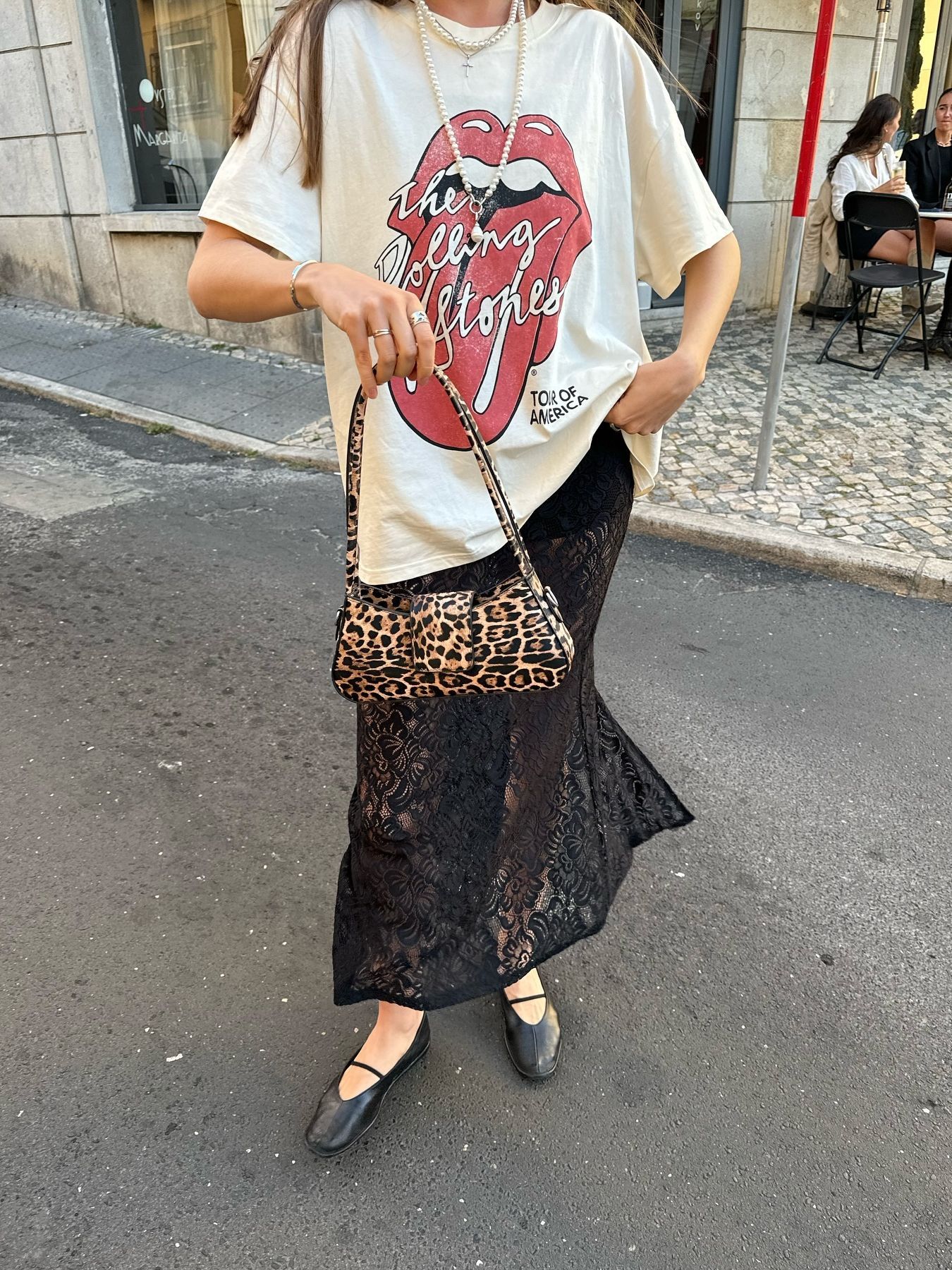
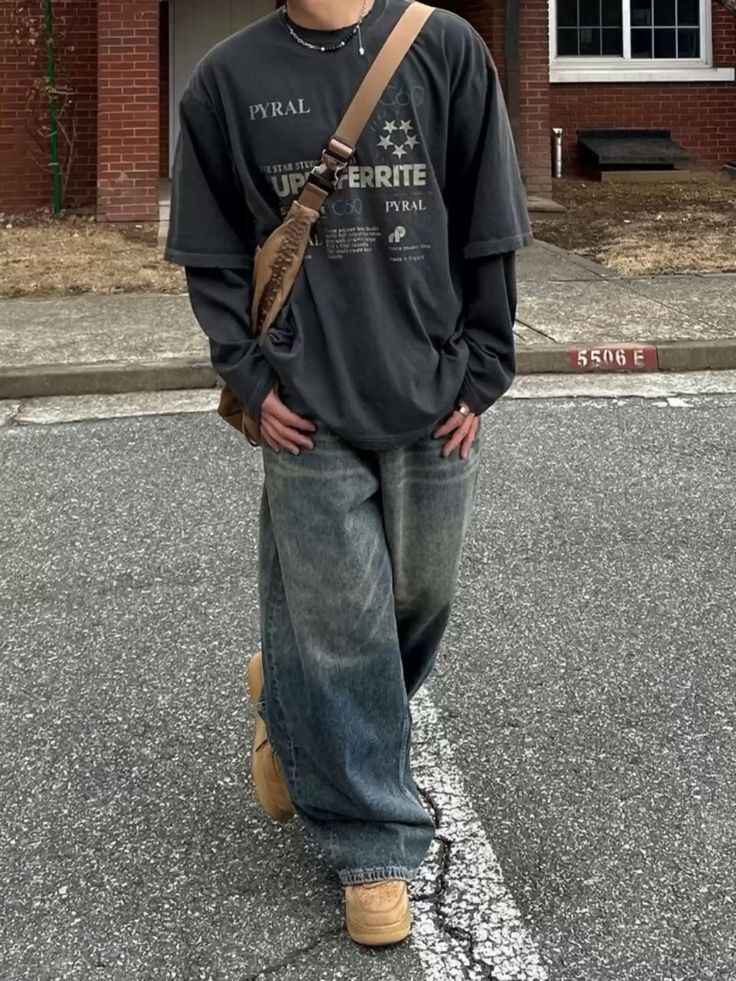
- Wide-leg vintage denim with oversized graphic tees for contemporary street style
- Mid-rise straight jeans with tucked-in colored t-shirts for balanced proportions
Color coordination principles suggest limiting palettes to three complementary tones, allowing denim’s natural blue undertones to anchor more adventurous t-shirt choices. Seasonal adaptations involve layering lightweight jackets or changing t-shirt weights to accommodate temperature variations.
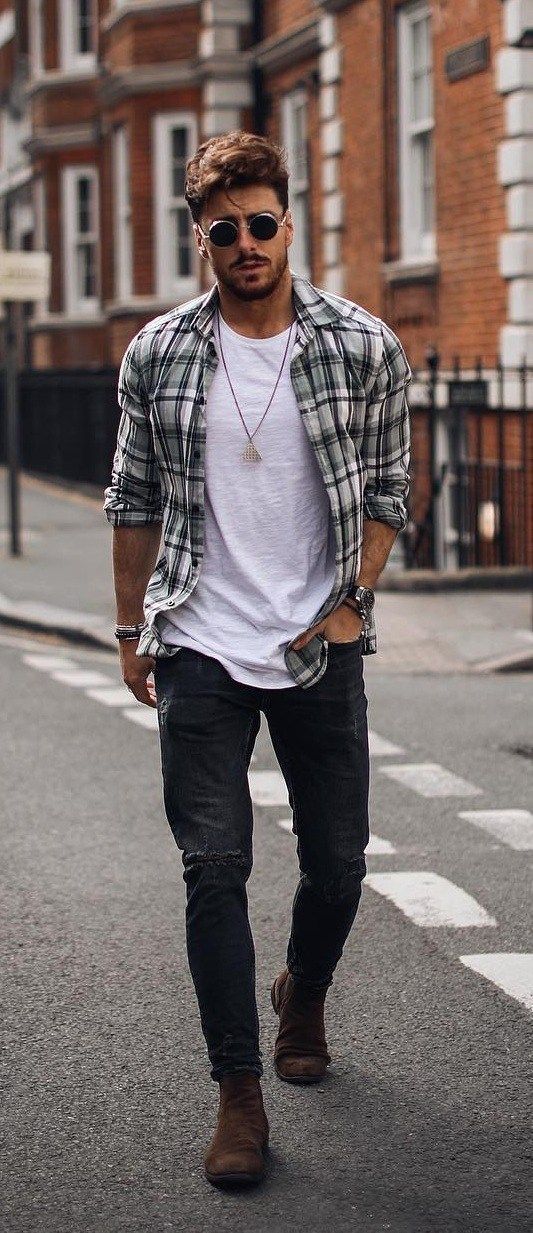
Chinos and T Shirt: Smart-Casual Perfection
Chino construction from cotton twill fabric provides structured appearance while maintaining comfort characteristics essential for all-day wear. This combination bridges casual and professional dress codes, making it invaluable for contemporary work environments that embrace relaxed formality.
Color selection significantly impacts overall sophistication levels. Neutral chinos in khaki, navy, or olive create versatile foundations that complement most t-shirt colors, while maintaining appropriate professional appearance standards.
Optimal color combinations:
- Khaki chinos with white or light blue t-shirts for classic appeal
- Navy chinos with gray or cream t-shirts for refined contrast
- Olive chinos with black or burgundy t-shirts for contemporary edge
Fit considerations emphasize slim-tapered silhouettes that create clean lines without restrictive tightness. T-shirt selection favors solid colors over graphics, maintaining the elevated aesthetic that makes this combination suitable for business casual environments.
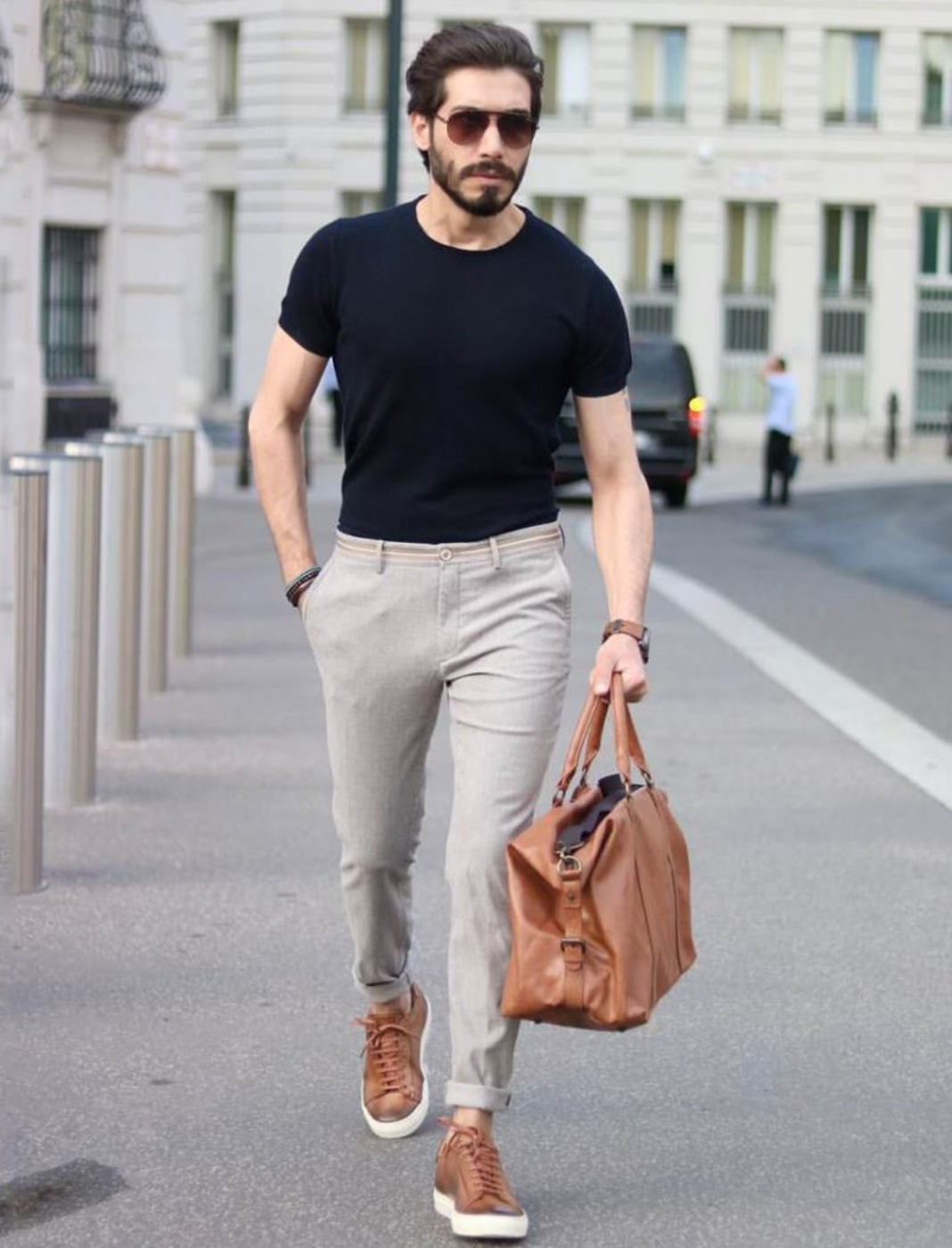
Wide-Leg Pants and Oversized T Shirt: 2025 Trending Style
Current fashion movements emphasize proportion play through contrasting silhouettes, with voluminous bottom pieces balanced by equally substantial tops. This approach reflects architectural principles where massive structural elements require appropriate visual anchoring.
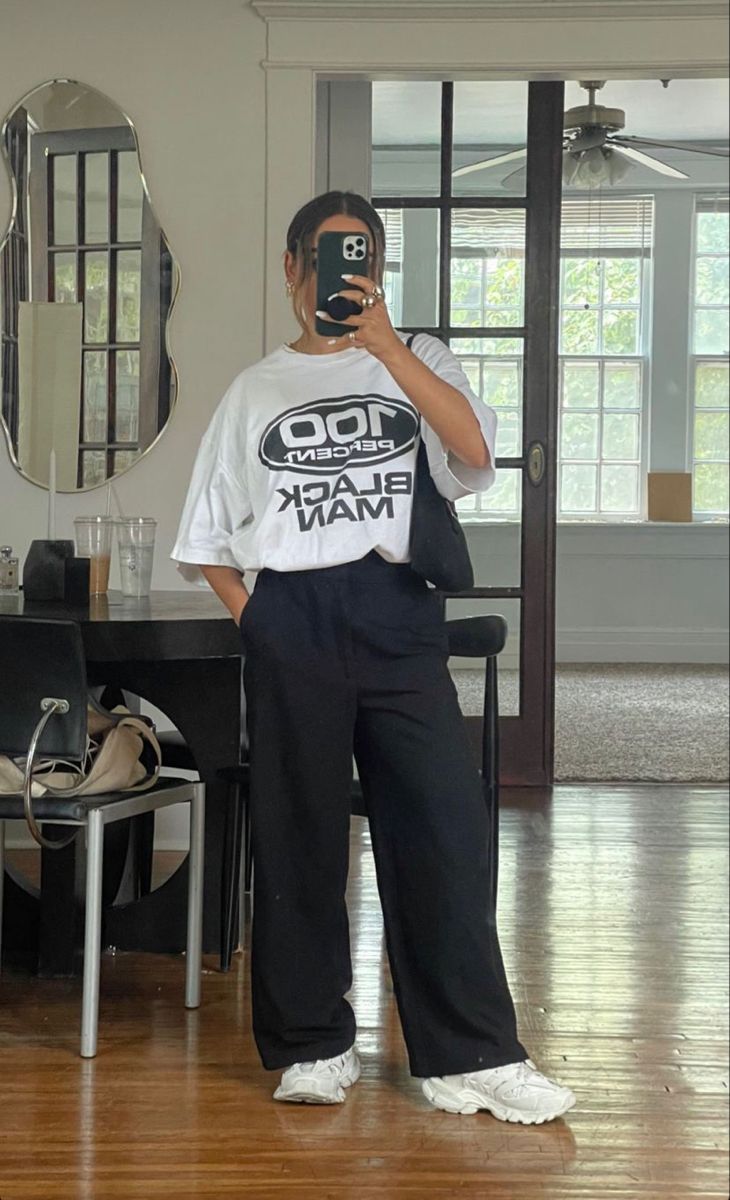
Fabric selection proves crucial for achieving proper drape and movement. Wide-leg pants require materials with sufficient weight to create elegant flowing motion, while oversized t-shirts benefit from structured cotton that maintains shape despite increased dimensions.
2025’s trending color palette emphasizes powder pink, burgundy, and soft earth tones that complement the relaxed sophistication this silhouette combination conveys. These colors reflect broader cultural movements toward comfort-conscious luxury and sustainable fashion choices.
Proportion guidelines suggest balancing the visual weight through strategic tucking or semi-tucking techniques that define the waistline while preserving the intentionally relaxed aesthetic that defines this contemporary styling approach.
Dress Pants and Fitted T Shirt: Elevated Minimalism
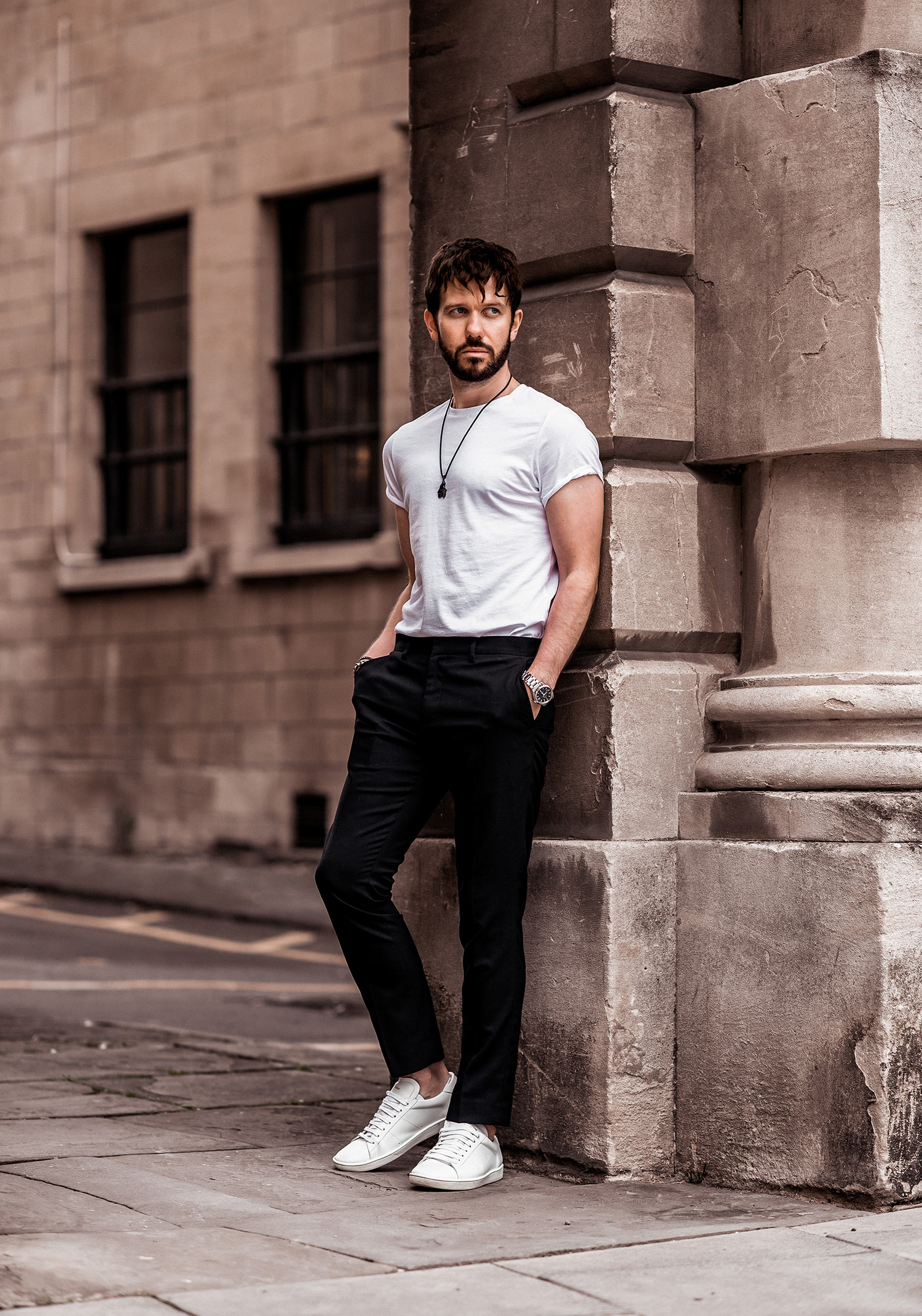
This sophisticated pairing demonstrates how casual elements can elevate formal pieces when executed with proper attention to material quality and proportional balance. The contrast between structured tailoring and relaxed cotton creates compelling visual tension.
Premium dress pants in wool-blend fabrics provide necessary structure while fitted t-shirts in high-quality cotton (250-280gsm) offer durability and shape retention essential for maintaining refined appearance throughout extended wear periods.
Key styling considerations:
- Fabric quality significantly impacts overall aesthetic success
- Color coordination should emphasize tonal harmony over stark contrast
- Fit precision ensures each piece complements rather than conflicts with its partner
Appropriate occasions include creative industries, casual Friday environments, and weekend social events that require elevated appearance without full formal dress requirements. This combination serves as excellent transitional styling for post-work social activities.
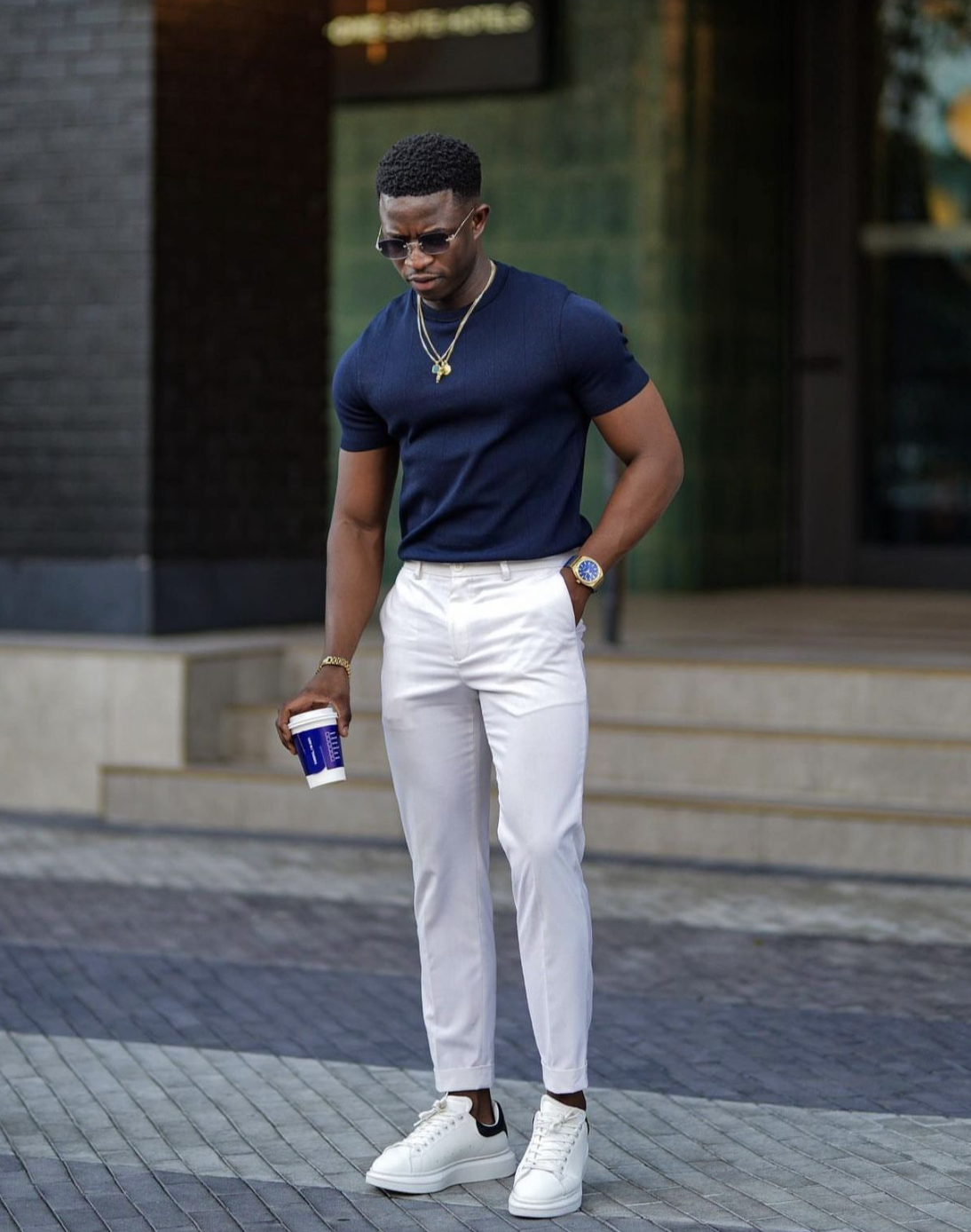
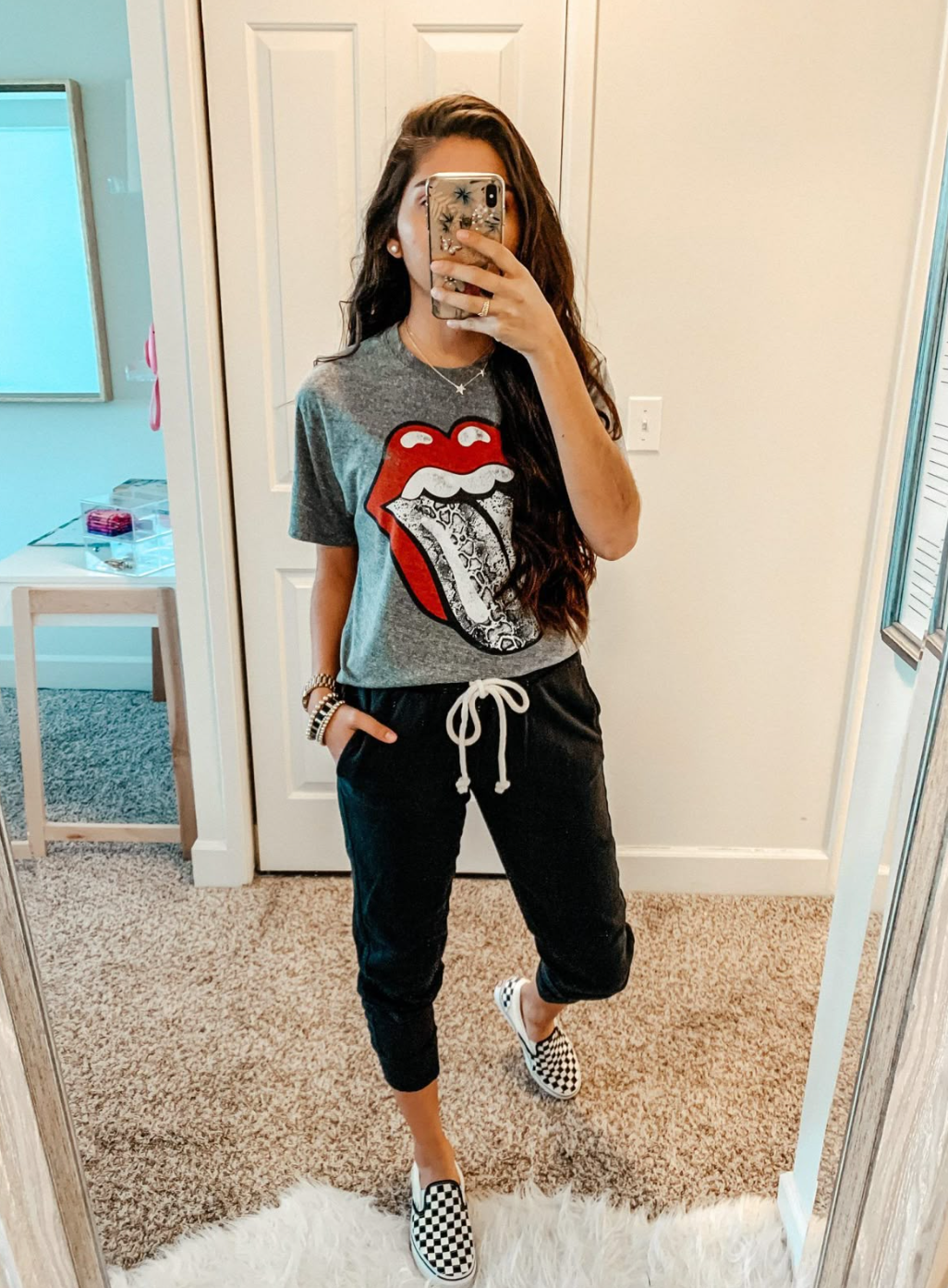
Joggers and Graphic T Shirt: Athleisure Excellence
The athleisure movement represents a fundamental shift in lifestyle fashion, acknowledging that contemporary life demands clothing capable of transitioning seamlessly between activity and leisure contexts. This combination prioritizes comfort while maintaining style consciousness.
Modern jogger construction has evolved beyond basic athletic wear, incorporating tailored cuts, premium materials, and refined details that elevate their aesthetic appeal. Pairing with graphic t-shirts allows for personal expression while maintaining the category’s casual roots.
Performance fabric benefits:
- Moisture-wicking properties for active use
- Four-way stretch for unrestricted movement
- Quick-dry capabilities for versatile lifestyle demands
Graphic t-shirt selection should consider overall outfit balance, with subtle designs maintaining sophistication while bold graphics create statement looks appropriate for casual social environments. Material quality remains essential for durability and comfort during both active and sedentary periods.
Linen Pants and Cotton T Shirt: Summer Sophistication
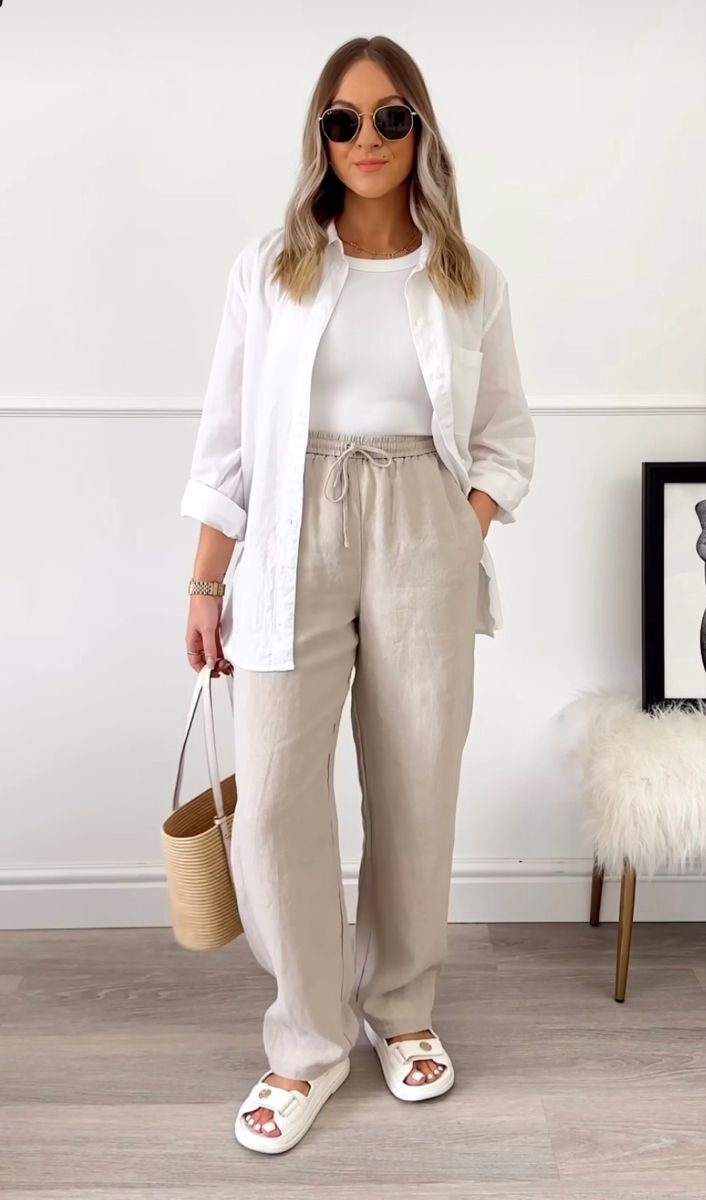
Natural fiber combinations provide superior breathability and temperature regulation essential for warm weather comfort. Linen’s inherent texture and drape create elegant silhouettes that complement cotton’s structured simplicity, resulting in refined casual aesthetics.
The natural wrinkle tendency of linen requires acceptance of relaxed formality, where perfect pressing becomes less important than overall proportional harmony. This approach aligns with contemporary fashion’s movement toward authentic, lived-in luxury.
Climate suitability factors:
- Linen’s open weave structure promotes air circulation
- Cotton’s moisture absorption prevents discomfort
- Light color reflection reduces heat absorption
Color selection should emphasize light neutrals and earth tones that complement natural fiber characteristics while providing practical heat reflection benefits. Maintenance involves accepting linen’s natural texture variations as design features rather than imperfections.
How to Choose the Perfect Fit: Pant and T Shirt Sizing Guide
Proper fit forms the foundation of successful styling, with each garment requiring individual assessment based on body proportions, personal preferences, and intended use contexts. Contemporary fit preferences have evolved toward more relaxed silhouettes while maintaining structural integrity.
Understanding fabric behavior across different constructions helps predict how garments will perform over time. Cotton t-shirts may experience minimal shrinkage even with pre-treatment, while various pant materials respond differently to washing and wearing stresses.
Body type considerations:
- Athletic builds benefit from fitted t-shirts that showcase physical development
- Broader torsos find balance through strategic proportional adjustments
- Height variations require different approach to hem lengths and overall proportions
Size charts provide starting points rather than definitive answers, as manufacturing variations between brands create inconsistencies that require individual evaluation. Trying garments before purchase remains the most reliable method for ensuring proper fit.
Pant Fit Variations: From Slim to Wide-Leg
Contemporary pant styling offers diverse fit options designed to complement different body types and aesthetic preferences. Understanding how each cut affects overall appearance enables informed decisions that enhance personal style development.
| Fit Type | Best For | Style Characteristics | T-Shirt Pairing |
|---|---|---|---|
| Slim | Athletic builds | Close-fitting through leg | Fitted or regular tees |
| Straight | Most body types | Consistent width from hip to hem | Any t-shirt style |
| Wide-leg | Tall frames | Dramatic flare from hip | Oversized or tucked tees |
| Tapered | Shorter heights | Narrow toward ankle | Fitted t-shirts |
Fabric choices significantly impact how different fits appear and function. Stretch denim allows slimmer cuts while maintaining comfort, whereas rigid fabrics require more generous proportions to prevent restriction during movement.
Current trends favor relaxed fits that prioritize comfort without sacrificing style consciousness. This shift reflects broader cultural movements toward work-life balance and lifestyle-conscious fashion choices that serve multiple contexts.
T Shirt Fit Guide: Classic, Fitted, and Oversized Options
T-shirt fit selection impacts both visual appearance and comfort levels, with each style serving specific aesthetic and functional purposes. Modern manufacturing provides precise sizing options that accommodate diverse body types and style preferences.
Classic fits provide versatile foundations suitable for most occasions and body types. These proportions avoid extreme styling choices while maintaining contemporary relevance, making them ideal for building foundational wardrobes.
Fit comparison details:
- Classic: Comfortable through chest and waist without restriction
- Fitted: Closer to body contours, emphasizing natural shape
- Oversized: Deliberately loose for contemporary street style aesthetics
Material weight affects how each fit appears and performs over time. Heavier fabrics (250-280gsm) maintain structure in oversized fits, while lighter weights work better for fitted applications where fabric needs to follow body contours closely.
Color Coordination Mastery: 20+ Winning Combinations
Color relationships create emotional responses and visual harmony that significantly impact overall outfit success. Understanding basic color theory principles enables confident mixing that enhances rather than detracts from personal style expression.
The color wheel provides foundational guidance for creating pleasing combinations, though fashion applications require flexibility to accommodate trends, personal preferences, and practical considerations like lifestyle demands and wardrobe existing pieces.
2025 trending color influences:
- Powder pink represents softened femininity and comfort-conscious luxury
- Burgundy offers sophisticated richness suitable for transitional seasons
- Earth tones connect with sustainability movements and natural material appreciation
Seasonal color psychology affects color choices, with lighter shades preferred during warmer months for heat reflection benefits, while deeper tones provide visual warmth during colder periods and complement seasonal lifestyle patterns.
Neutral Foundations: Black, White, Gray, and Beige
Neutral colors provide wardrobe foundations that support endless combination possibilities while maintaining sophisticated simplicity. These shades work across seasons, occasions, and trend cycles, making them essential for building versatile clothing collections.
Building monochromatic outfits using varying neutral shades creates sophisticated depth without requiring complex color knowledge. This approach particularly suits professional environments where subtle refinement communicates competence and attention to detail.
Versatile neutral combinations:
- Black pants with white t-shirts for classic contrast
- Gray pants with matching tonal gray t-shirts for subtle sophistication
- Beige pants with cream t-shirts for warm, approachable aesthetics
- Navy pants with light gray t-shirts for contemporary professional appeal
Texture variations prevent neutral combinations from appearing boring, with different fabric finishes adding visual interest while maintaining color harmony. This technique proves particularly effective in monochromatic styling approaches.
Bold and Trending: 2025’s Fashion-Forward Palettes
Contemporary color trends reflect broader cultural movements toward emotional wellness and sustainable consciousness. These palettes prioritize comfort and connection over dramatic statements, aligning with lifestyle changes that emphasize authentic self-expression.
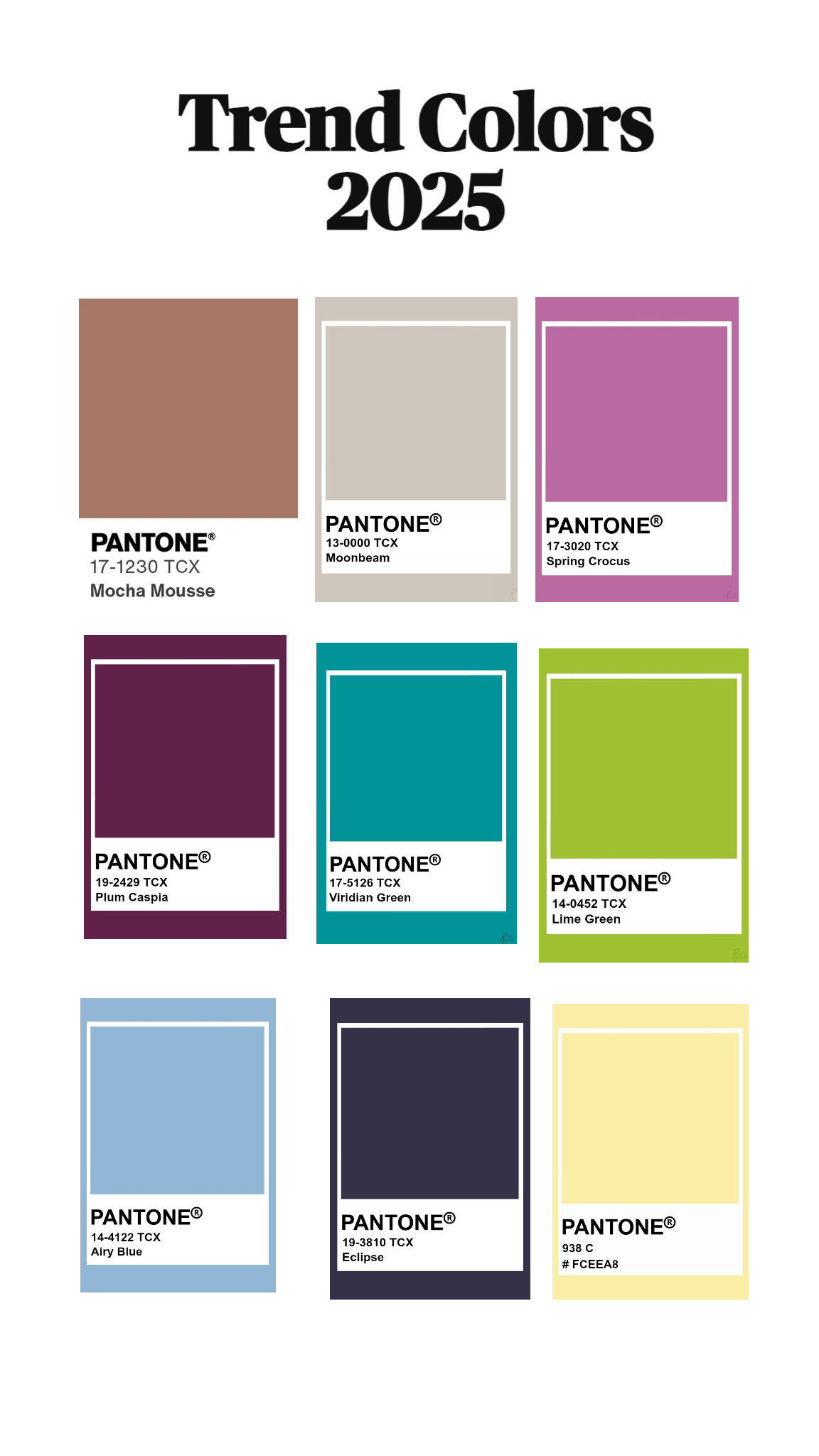
Incorporating trending colors requires balance between fashion-forward awareness and personal style authenticity. Subtle integration through accent pieces allows trend participation without overwhelming individual aesthetic preferences or existing wardrobe pieces.
Strategic color placement can emphasize positive features while creating focal points that direct attention appropriately. Brighter colors work effectively as t-shirt choices when balanced with neutral pant selections, creating dynamic combinations that maintain sophistication.
Styling Tips by Audience: Men, Women, and Universal Approaches
Fashion expression transcends traditional gender boundaries, though certain styling techniques address specific fit considerations and cultural expectations. Understanding these nuances enables informed choices that align with personal comfort levels and social contexts.
Contemporary fashion increasingly embraces individual expression over rigid categorization, though practical considerations like fit differences and social expectations continue influencing styling decisions across different demographic groups.
Men’s Pant and T Shirt Styling
Male styling traditionally emphasizes clean lines and minimal ornamentation, though contemporary approaches allow for increased creativity and personal expression. Understanding classic principles provides foundations for developing individual style signatures.
Essential men’s combinations:
- Dark jeans with solid color t-shirts for versatile casual wear
- Chinos with pocket tees for relaxed sophistication
- Joggers with performance tees for active lifestyle integration
- Dress pants with premium cotton tees for elevated casual aesthetics
Fit considerations for men often prioritize straight silhouettes that create clean lines without excessive tightness. This approach works across body types while maintaining contemporary relevance and comfort for extended wear periods.
Color preferences generally favor deeper tones and understated patterns, though individual expression should guide final decisions. Building versatile wardrobes involves selecting pieces that work together while reflecting personal aesthetic preferences.
Accessory integration through watches, belts, and footwear can elevate basic pant and t-shirt combinations into more sophisticated looks suitable for diverse occasions without requiring extensive wardrobe changes.
Women’s Pant and T Shirt Styling
Women’s styling offers broader creative possibilities through varied silhouettes, tucking techniques, and accessory integration. Contemporary approaches emphasize comfort and versatility while maintaining elegant sophistication appropriate for diverse lifestyle demands.
Strategic styling techniques:
- Front tucking creates defined waistlines while maintaining casual appeal
- Layering lightweight cardigans or blazers elevates basic combinations
- Belt additions provide structure and visual interest to flowing silhouettes
- Footwear choices dramatically alter overall outfit aesthetics
Proportion balance through strategic fit choices accommodates different body types while enhancing natural features. Understanding how different cuts affect overall appearance enables confident styling decisions that serve both aesthetic and comfort considerations.
Versatile women’s combinations:
- High-waisted wide-leg pants with fitted tees for contemporary elegance
- Straight-leg jeans with oversized tees for relaxed sophistication
- Cropped pants with longer t-shirts for modern proportional play
- Palazzo pants with tucked fitted tees for flowing feminine appeal
Color and pattern mixing offers opportunities for creative expression while building cohesive wardrobes that serve multiple occasions and seasonal requirements.
Unisex and Gender-Neutral Approaches
Contemporary fashion increasingly recognizes individual preference over traditional gender categorization, creating space for authentic self-expression through clothing choices that prioritize personal comfort and aesthetic alignment.
Unisex styling focuses on fit quality, material excellence, and proportional harmony rather than gendered design elements. This approach creates timeless aesthetics that transcend trend cycles while serving diverse body types and style preferences.
Universal styling principles:
- Quality materials enhance appearance regardless of specific cut details
- Proper fit creates flattering silhouettes across all body types
- Color confidence comes from understanding personal preferences over external expectations
- Comfort enables authentic self-expression through natural movement and confidence
Gender-neutral fashion brands increasingly offer sizing systems based on body measurements rather than traditional gender categories, providing better fit options for diverse body types while eliminating restrictive categorization.
Building inclusive wardrobes involves selecting pieces that serve multiple styling contexts while reflecting individual aesthetic preferences. This approach creates versatile collections that support diverse lifestyle demands without requiring extensive specialized pieces.
Seasonal Styling: Pant and T Shirt for Every Weather
Climate considerations significantly impact fabric choices, color selection, and layering strategies essential for maintaining comfort and style across changing weather conditions. Understanding seasonal transitions enables wardrobe planning that serves year-round lifestyle demands.
Natural fiber properties provide practical benefits for seasonal dressing, with cotton’s breathability supporting warm weather comfort while layering capabilities extend usefulness into cooler periods. Synthetic blends offer performance characteristics suited for specific climate challenges.
Fabric weight guidelines:
- Summer: 150-200gsm cotton for maximum breathability
- Spring/Fall: 200-250gsm for versatile comfort
- Winter base layers: 180-220gsm with layering capability
Color psychology influences seasonal preferences, with lighter shades reflecting heat during summer months while deeper tones provide visual warmth during winter periods. These choices align with both practical and aesthetic considerations.
Spring and Summer: Light Fabrics and Bright Colors
Warm weather dressing prioritizes breathability and heat reflection while maintaining style consciousness appropriate for increased social activities during pleasant weather periods. Natural fibers excel in these conditions through superior moisture management and comfort characteristics.
Linen pants paired with lightweight cotton t-shirts create sophisticated combinations suitable for various warm weather occasions while providing necessary comfort for extended wear in elevated temperatures and humidity levels.
Summer optimization strategies:
- Light colors reflect heat and reduce cooling energy requirements
- Loose fits promote air circulation around the body
- Natural fibers provide superior moisture absorption and quick-dry properties
- UV protection considerations influence fabric choices and coverage decisions
Color palettes should emphasize lighter shades and refreshing tones that complement seasonal moods and practical heat management requirements. Pastels and bright accent colors work effectively against neutral foundations.
Fall and Winter: Layering and Cozy Combinations
Cooler weather requires strategic layering approaches that maintain style while providing necessary warmth and weather protection. Base layer quality becomes crucial for comfort and appearance as additional layers are added or removed throughout changing daily temperatures.
Premium cotton t-shirts with proper weight (220-280gsm) provide excellent base layer characteristics, maintaining comfort against skin while supporting outer layer integration. Material choices affect overall warmth and moisture management critical for cold weather comfort.
Effective layering techniques:
- Base layer t-shirts in merino wool or premium cotton for temperature regulation
- Intermediate insulation through sweaters or light jackets
- Outer shell protection from wind and precipitation as climate demands
- Strategic color coordination across multiple layers for cohesive aesthetics
Seasonal color preferences gravitate toward deeper, richer tones that provide visual warmth and complement natural lighting conditions during shorter daylight periods characteristic of autumn and winter seasons.
Common Mistakes to Avoid: 10+ Styling Don’ts
Understanding frequent styling errors enables proactive avoidance of common pitfalls that diminish overall appearance effectiveness. These mistakes often stem from misunderstanding fit principles, color relationships, or contextual appropriateness rather than poor aesthetic judgment.
Critical styling errors to avoid:
Incorrect sizing – Garments that are too tight restrict movement and create unflattering silhouettes, while excessively loose fits appear sloppy rather than intentionally relaxed.
Poor color combinations – Clashing colors create visual discord, while insufficient contrast eliminates definition between garment pieces.
Fabric quality neglect – Inferior materials appear cheap regardless of styling effort, undermining overall aesthetic impact and reducing garment longevity.
Ignoring body proportions – Styles that fight natural body characteristics rather than enhance them create awkward appearances and comfort issues.
Occasion inappropriateness – Casual combinations in formal settings or overly dressed looks in relaxed contexts create social disconnection.
Neglecting maintenance – Wrinkled, stained, or poorly maintained garments destroy even excellent styling efforts and color coordination.
Trend over-adoption – Following every fashion trend without considering personal style creates inconsistent aesthetics and poor wardrobe cohesion.
Accessory misalignment – Inappropriate accessories clash with the casual nature of pant and t-shirt combinations, creating visual confusion.
Avoiding these common errors requires developing personal style awareness and understanding how individual choices affect overall appearance impact across different contexts and social situations.
Accessorizing Your Pant and T Shirt Look: Complete Guide
Strategic accessory selection transforms basic pant and t-shirt combinations into distinctive style statements while maintaining the inherent simplicity that defines this classic pairing. The key lies in enhancement rather than overwhelming the foundational aesthetic.
Quality accessories demonstrate attention to detail and personal style awareness, elevating casual combinations into more sophisticated looks appropriate for diverse social and professional contexts. Investment in versatile pieces provides maximum styling flexibility across multiple outfits.
Accessory category hierarchy:
- Footwear provides foundational style establishment
- Belts offer waist definition and visual interest
- Bags serve functional and aesthetic purposes
- Jewelry adds personal expression touches
Balance remains crucial when integrating accessories, ensuring each element contributes to overall harmony rather than competing for attention. Minimalist approaches often prove more effective than heavily accessorized looks with casual foundations.
Footwear Choices: From Sneakers to Dress Shoes
Shoe selection dramatically alters the overall aesthetic and occasion appropriateness of pant and t-shirt combinations. Understanding how different footwear styles affect overall outfit perception enables strategic choices that enhance rather than contradict intended impressions.
Footwear style impact analysis:
| Shoe Type | Aesthetic Effect | Best Pant Pairings | Occasion Suitability |
|---|---|---|---|
| White sneakers | Clean, modern casual | All styles | Daily wear, casual social |
| Leather boots | Rugged sophistication | Jeans, chinos | Creative professional |
| Loafers | Refined casual | Chinos, dress pants | Business casual |
| Athletic shoes | Performance-oriented | Joggers, technical pants | Active lifestyle |
Material quality affects both appearance and durability, with genuine leather options providing superior longevity and aging characteristics that improve aesthetically over time. Synthetic alternatives offer performance benefits for active use contexts.
Color coordination between footwear and overall outfit creates visual cohesion, though contrast can create interesting focal points when executed thoughtfully. Classic neutral shoes provide maximum versatility across diverse clothing combinations.
Bags, Belts, and Beyond: Finishing Touches
Secondary accessories complete outfit compositions through functional and aesthetic contributions that demonstrate personal style awareness and attention to detail. Strategic selection enhances overall sophistication without overwhelming casual foundations.
Belt selection should consider both functional necessity and visual enhancement opportunities. Leather options in neutral colors provide versatile foundations that work across multiple outfits, while canvas or fabric alternatives complement casual aesthetics.
Accessory integration principles:
- Metal consistency across watches, belt hardware, and bag details creates visual harmony
- Color coordination with existing outfit elements prevents clashing and maintains cohesion
- Quality investment in classic pieces provides better long-term value than trendy alternatives
- Functional considerations ensure accessories serve practical purposes beyond aesthetic enhancement
Bag choices range from minimal crossbody options for essential-carrying to structured totes for professional contexts. Selection should align with lifestyle demands while complementing overall aesthetic intentions.
Awcaseus Brand Spotlight: Premium T Shirts for Perfect Pant Pairings
Within the landscape of contemporary fashion, certain pieces transcend mere clothing to become textile manifestos—wearable expressions of design philosophy that bridge the gap between urban aesthetics and philosophical contemplation. Awcaseus represents this intersection through meticulously crafted t-shirts that serve as ideal foundations for diverse pant pairings.
The brand’s commitment to premium cotton fabrics weighing 250-280gsm provides exceptional durability while maintaining structured silhouettes resistant to deformation over extended wear periods. This weight range delivers optimal balance between comfort and architectural form, essential characteristics for garments intended to anchor sophisticated casual wardrobes.
Technical excellence characteristics:
- Pre-treated cotton fibers resist shrinkage and pilling through advanced processing
- Reinforced shoulder seams create sharp, boxy silhouettes that reflect disciplined urban aesthetics
- Water-based silk-screen inks produce refined gradient effects while maintaining environmental consciousness
- Structured construction maintains shape integrity across diverse styling applications
Awcaseus design philosophy emphasizes minimalist color palettes including titanium gray, carbon black, and navy infused with gray undertones. These shades provide versatile foundations that complement various pant styles while maintaining the contemplative aesthetic that defines the brand’s approach to contemporary fashion.
The brand’s unisex silhouettes accommodate diverse body types while creating consistent aesthetic language that transcends traditional gender boundaries. This approach aligns with contemporary fashion movements toward inclusive design that prioritizes individual expression over demographic categorization.
Frequently Asked Questions: Pant and T Shirt Essentials
Understanding common concerns about pant and t-shirt styling provides practical guidance for everyday wardrobe decisions while addressing specific terminology and cultural considerations that affect clothing choices across diverse contexts.
Can You Wear a Blue T Shirt and Black Pants?
This classic color combination creates striking contrast while maintaining sophisticated simplicity appropriate for various occasions. Blue and black pairing works particularly well when considering undertone relationships and overall outfit balance.
Navy blue t-shirts with black pants provide subtle contrast that appears intentional rather than accidental, while brighter blues create more dramatic visual interest. The contrast level affects occasion appropriateness, with subtle combinations working better for professional contexts.
Enhancement strategies:
- Add brown leather accessories to warm the cool color palette
- Incorporate white elements through footwear or layering pieces
- Consider navy pants as alternative for less stark contrast
- Balance proportions through strategic fit selections
This combination appears frequently in menswear applications where classic color relationships provide foundational sophistication suitable for diverse lifestyle contexts.
Do Gang Members Wear White T-Shirts and Black Pants?
White t-shirts and black pants represent common, versatile clothing choices worn by millions of people across all demographics for practical and aesthetic reasons. These colors provide affordable, easy-to-maintain wardrobe foundations that work across diverse occasions and personal styles.
The universal popularity of this combination stems from practical considerations including easy cleaning, color versatility, and broad availability across price points. Fashion history demonstrates these colors’ enduring appeal in streetwear, professional casual, and formal contexts.
Universal wearing contexts:
- Restaurant service industry uniforms
- Art and creative professional environments
- Casual social gatherings and everyday wear
- Athletic and fitness activities
- Travel wardrobes requiring minimal packing
Focusing on styling quality, fit, and fabric selection creates distinctive looks that reflect personal aesthetic preferences rather than external associations.
How to Draw a Simple T-Shirt and Pants?
Fashion illustration begins with understanding basic garment shapes and proportional relationships essential for creating recognizable clothing representations. Simple drawing techniques focus on capturing essential characteristics rather than complex details.
Step-by-step drawing approach:
T-shirt construction: Start with rectangular torso shape, add sleeve rectangles at shoulder points, create neckline curve, connect elements with smooth lines
Pant structure: Begin with two parallel vertical lines for legs, add waistband rectangle connecting tops, create crotch curve, finish with hem lines
Proportional guidelines: T-shirt length typically ends at hip level, pant waistband sits at natural waist, leg width varies by style preference
Detail additions: Add seam lines, pocket placements, hem finishing details to increase realism and technical accuracy
Drawing practice improves through repetition and observation of actual garments, helping develop understanding of how clothing construction affects overall appearance and fit characteristics.
English Language Learning: Essential Clothing Vocabulary
Fashion vocabulary provides practical language applications for English learners while introducing cultural concepts related to clothing, shopping, and personal expression across different English-speaking regions and social contexts.
Essential clothing terms:
- Garments: Individual clothing items (t-shirt, pants, shoes)
- Outfit: Complete clothing combination for specific occasions
- Style: Overall aesthetic approach or fashion category
- Fit: How clothing relates to body size and shape
- Material/Fabric: Physical construction substances (cotton, denim, polyester)
Understanding American versus British terminology differences helps navigate international shopping experiences and cultural exchanges where clothing discussions arise naturally in social and professional contexts.
Common Phrases and Shopping Expressions
Practical clothing conversations require specific vocabulary for describing preferences, asking for assistance, and expressing satisfaction or concerns about purchases. These phrases support confident communication in retail environments and social discussions.
Useful shopping phrases:
- “I’m looking for a casual t-shirt to wear with jeans”
- “What size do you recommend for a comfortable fit?”
- “Do you have this style in other colors?”
- “Can I try this on to check the fit?”
- “Does this fabric require special care instructions?”
Professional retail communication involves polite inquiry methods and appropriate response protocols that demonstrate cultural awareness and communication competence across diverse social contexts.
Care and Maintenance: Keeping Your Pant and T Shirt Looking Great
Proper garment care extends lifespan while maintaining appearance quality essential for continued styling success. Understanding fabric behaviors and appropriate maintenance techniques prevents common damage that diminishes clothing effectiveness over time.
Comprehensive care guidelines:
Washing protocols: Separate colors to prevent bleeding, use appropriate water temperatures for fabric types, avoid overloading washing machines to prevent excessive wear, select gentle cycles for delicate materials.
Drying strategies: Air drying prevents shrinkage and heat damage, hanging techniques maintain shape integrity, avoid direct sunlight that can cause color fading, ensure complete drying to prevent mildew formation.
Storage methods: Folding versus hanging decisions based on fabric characteristics, cedar blocks or sachets for natural pest deterrence, adequate spacing to prevent compression wrinkles, seasonal rotation to optimize closet space.
Quality garment care represents investment protection that maintains appearance standards while reducing replacement frequency, creating more sustainable wardrobe management practices aligned with contemporary environmental awareness.
Investment in proper care extends clothing life significantly, with high-quality pieces like those featuring 250-280gsm cotton construction responding particularly well to appropriate maintenance techniques that preserve their structural integrity and aesthetic appeal across extended use periods.

At Awcaseus, we create more than t-shirts — we craft statements. Inspired by urban stillness and modern philosophy, our pieces combine premium fabrics, structured fits, and abstract graphics. Every design is a reflection of thought, identity, and quiet confidence. Awcaseus is where fashion becomes a voice — and you wear the future.